In its written statement, ABTTF highlighted that all known religions in Greece have the right to elect their own religious leaders, emphasising that only the religious leaders of the Turkish Minority in Western Thrace are appointed by the state, and that this practice is incompatible with the principles of freedom of religion or belief, equality and the prohibition of discrimination.
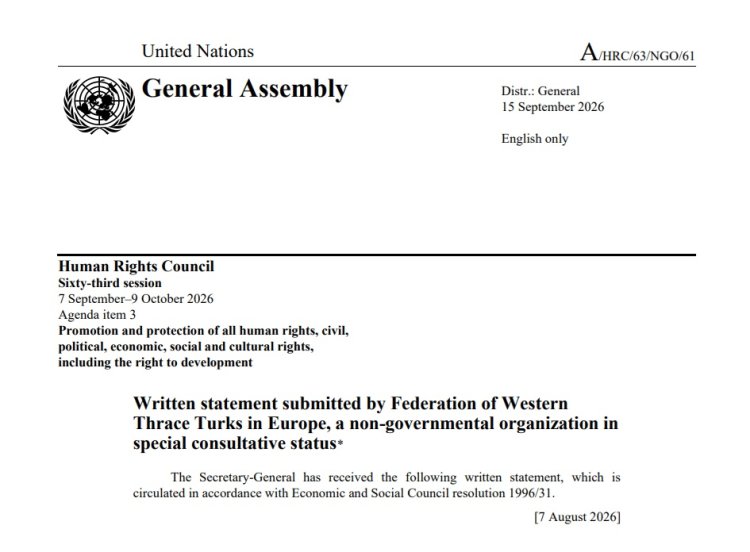
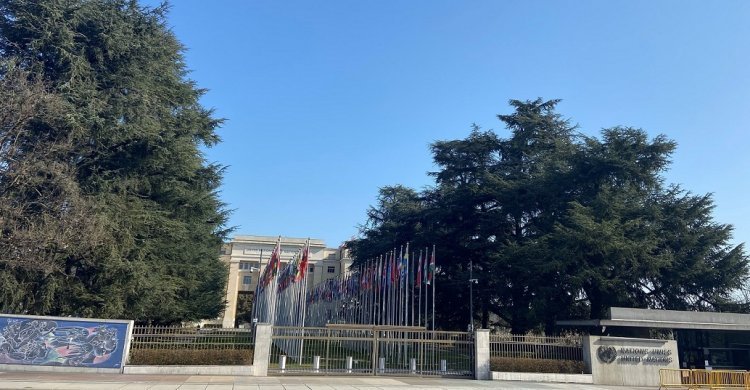
The Federation of Western Thrace Turks in Europe (ABTTF), which holds Special Consultative Status with the UN Economic and Social Council, submitted a written statement to the 63rd session of the United Nations (UN) Human Rights Council, held in Geneva, Switzerland, from 7 September to 7 October 2026, under the title ‘‘Ongoing Interference in the Religious Autonomy of the Turkish Minority in Western Thrace in Greece, and Violations of Religious Freedom’’, bringing the religious issues faced by the Turkish Minority in Western Thrace to the attention of the UN.
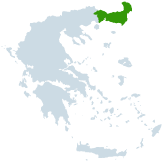
In the statement, ABTTF noted that the religious status and rights of the Turkish Minority in Western Thrace are guaranteed by the 1913 Treaty of Athens and the 1923 Treaty of Lausanne, and stressed that the Minority has the right to elect its own religious leaders (muftis), to manage its religious institutions and to enjoy autonomy in religious matters.
ABTTF pointed out that the Turkish Minority in Western Thrace had elected its own muftis until 1985, but following a legislative change in 1991, the state began appointing muftis, thereby depriving the Minority of its right to elect muftis.
ABTTF highlighted that, under Law No. 4964/2022, the mufti offices—which previously enjoyed autonomous status—were transformed into public institutions under the Ministry of Education, Religious Affairs and Sport; it noted that a state-appointed mufti was appointed in Didymoteicho in 2026, and that similar appointment processes were being carried out in Xanthi and Komotini.
Pointing out that other known religions in Greece have the right to elect their own religious leaders and freely manage their religious institutions, ABTTF highlighted that keeping only the religious institutions of the Turkish Minority in Western Thrace under state control is incompatible with the principles of freedom of religion or belief, equality and the prohibition of discrimination.
ABTTF also brought the events that took place at the Çınar Mosque in Xanthi on 11 October 2024 to the attention of the UN Human Rights Council, noting that four members of the Turkish Minority in Western Thrace had been sentenced to 17 months’ imprisonment in the case brought following the events, and that this sentence—which was subsequently converted to a fine—constituted political pressure on the minority through the judicial system.
Please click below for the full text of the written statement submitted by ABTTF to the Human Rights Council:
https://digitallibrary.un.org/record/4127928?v=pdf