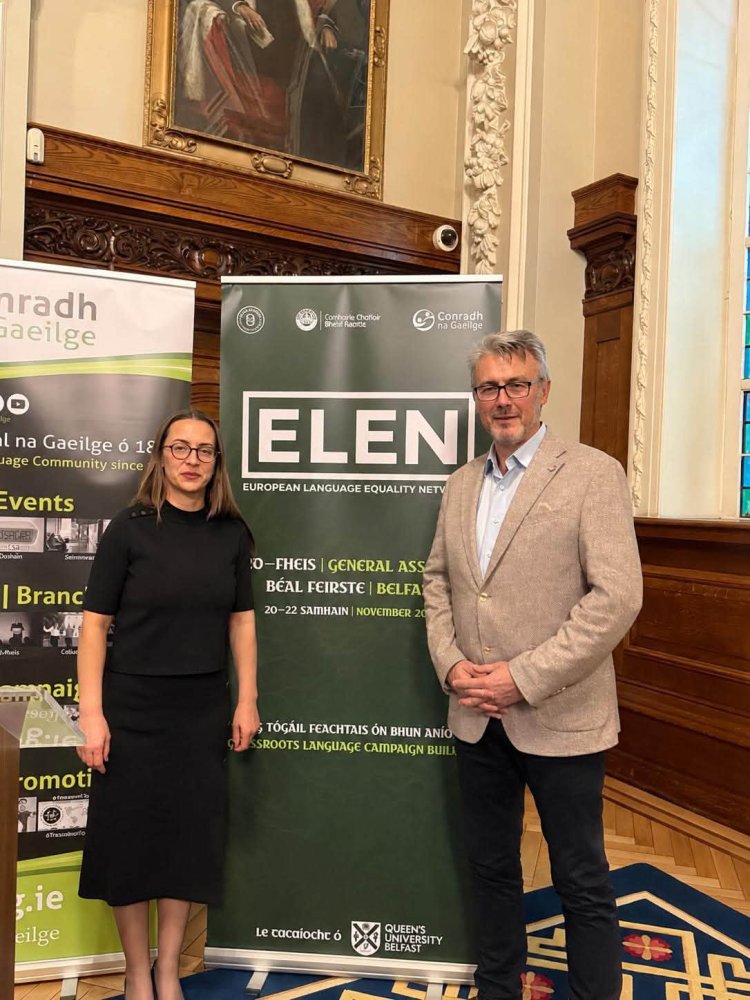
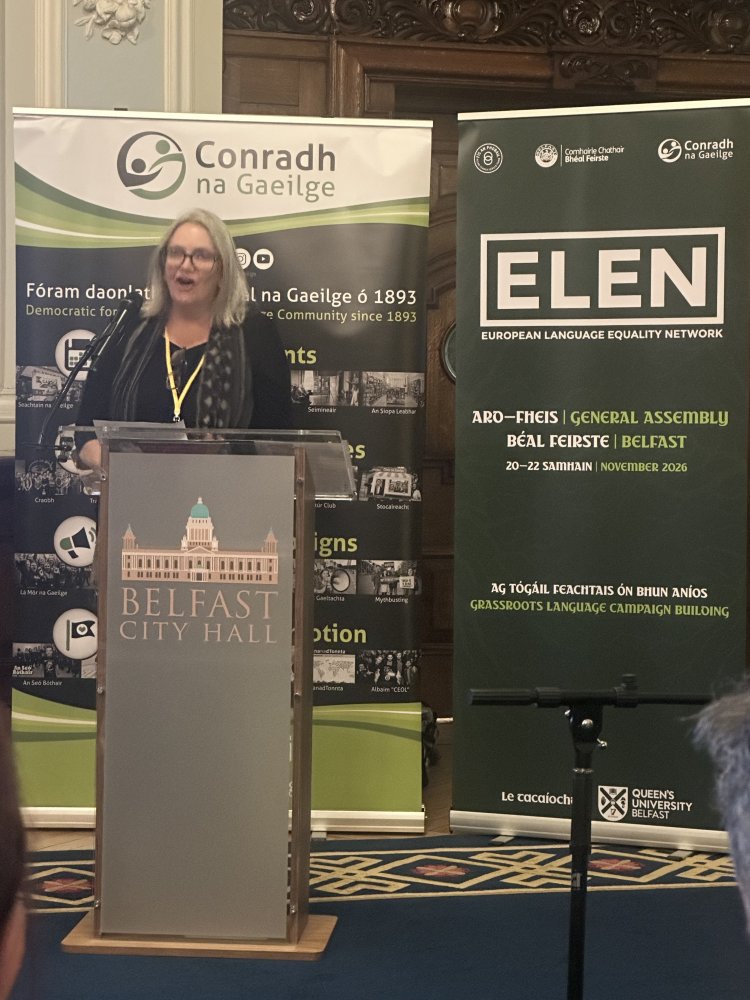
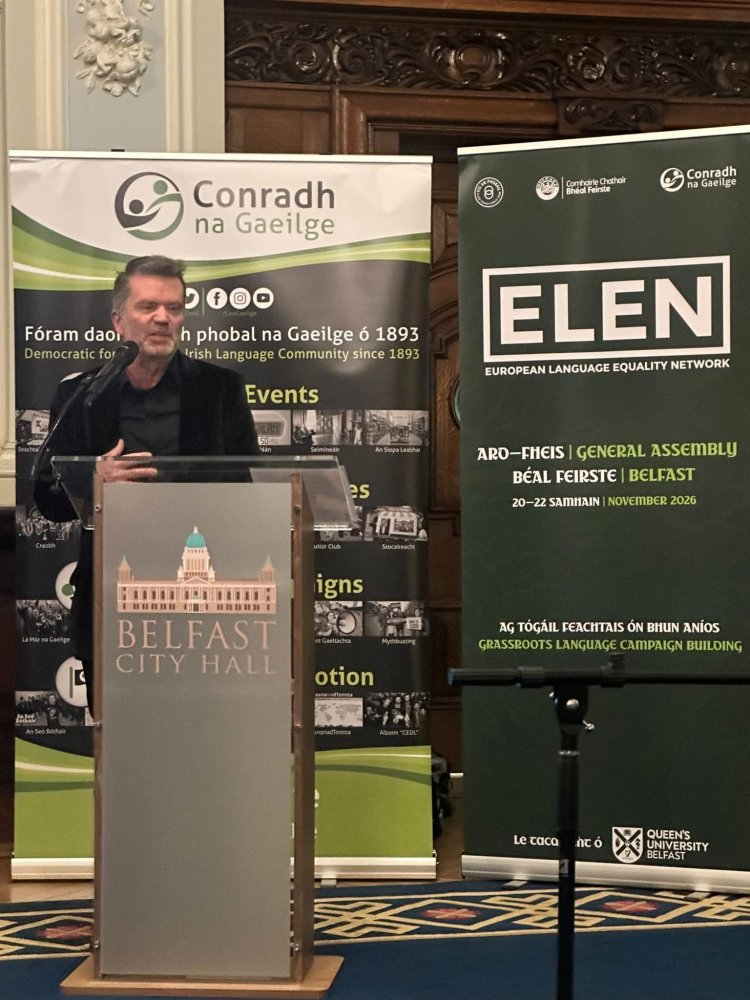
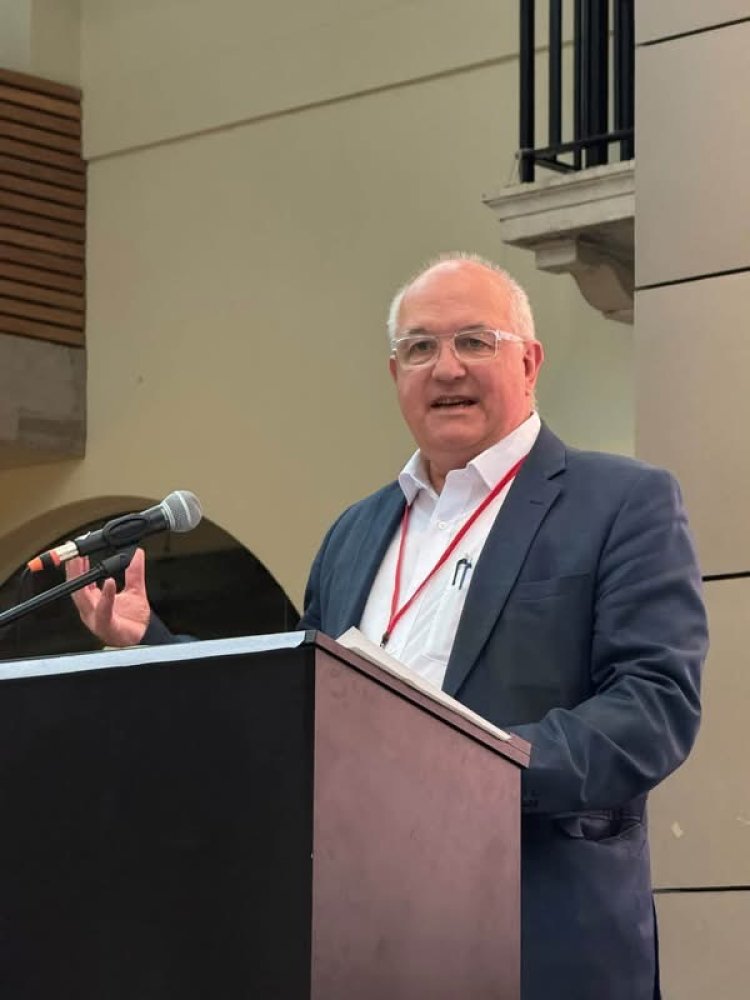
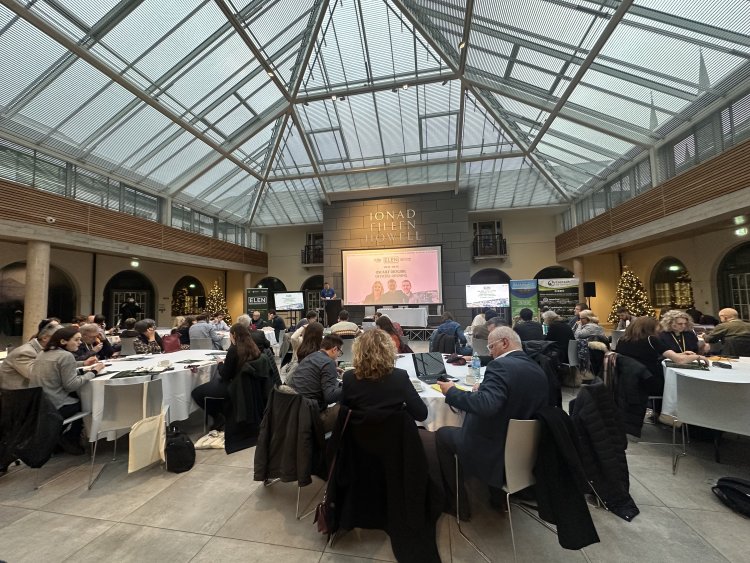
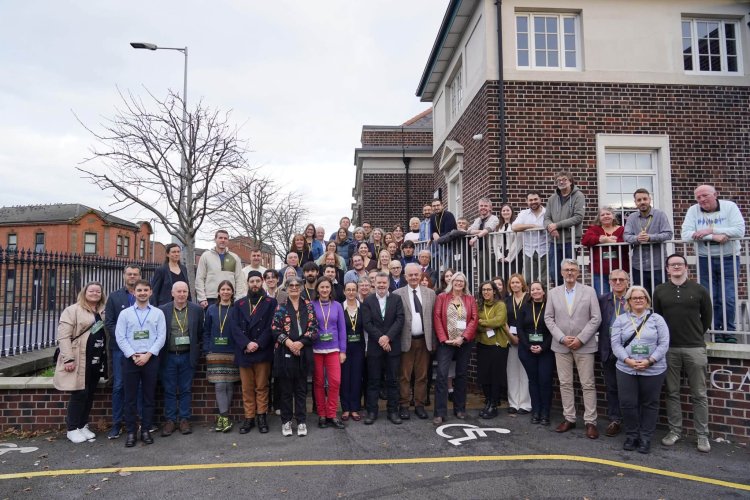
The Federation of Western Thrace Turks in Europe (ABTTF), representing the Turkish Minority in Western Thrace, attended the 2026 General Assembly of the European Language Equality Network (ELEN), held on 20–22 November 2026 in Belfast, the capital of Northern Ireland.
Hosted by Conradh na Gaeilge (the Gaelic League) and its local branch in West Belfast, Glór na Móna, the General Assembly brought together representatives of national and linguistic minorities from various European countries. ABTTF President Halit Habip Oğlu and ABTTF International Relations Director Melek Kırmacı attended the event.
In his opening address at the General Assembly, the United Nations (UN) Special Rapporteur on Minority Issues, Prof. Nicolas Levrat, provided an update on his official visit to Brussels in January 2026, undertaken to assess the human rights situation of national, ethnic, religious and linguistic minorities across the European Union (EU), and on the forthcoming UN report relating to the visit.
It is anticipated that the findings of the report will significantly bolster ELEN’s long-standing calls for a stronger and more comprehensive European framework for language protection.
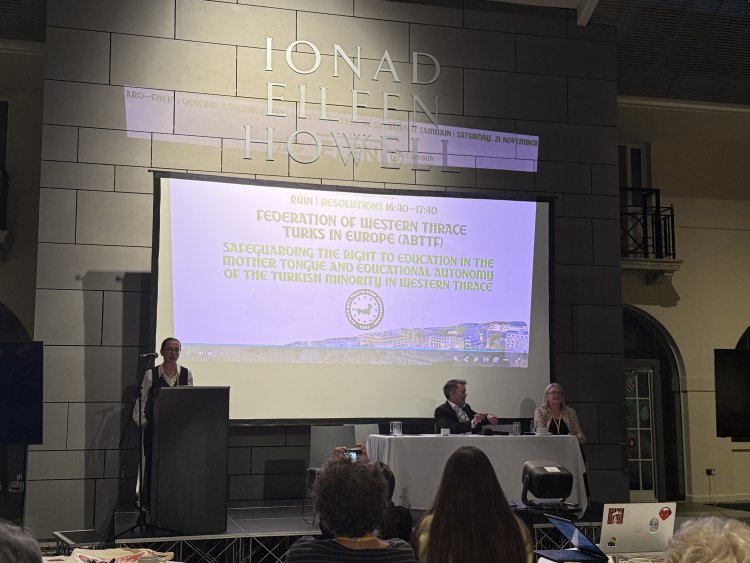
The draft resolution tabled by ABTTF was adopted unanimously
The General Assembly discussed ELEN’s proposal, titled ‘‘European Strategic Framework for the Protection and Revitalisation of Minority and Endangered Languages 2027–2040’’, which also received strong support from the UN Special Rapporteur on Minority Issues, Prof. Nicolas Levrat. The proposal aims to ensure that all endangered and minority languages in Europe achieve a stable and sustainable status.
During the General Assembly, where draft resolutions submitted by ELEN member organisations were also put to the vote, ABTTF’s draft resolution titled “Safeguarding the right to education in the mother tongue and educational autonomy of the Turkish Minority in Western Thrace” was adopted unanimously.
The resolution emphasised that the right to education in the mother tongue and educational autonomy of the Turkish Minority in Western Thrace were guaranteed by the 1923 Treaty of Lausanne, whilst noting that this educational autonomy has been progressively eroded over the years through various legal regulations and administrative practices.
The resolution draws attention to the fact that, although pre-school education is compulsory in Greece, there are no Turkish-Greek bilingual kindergartens for the Turkish minority. It stipulates that Turkish primary schools in Western Thrace have been closed one by one on the pretext of insufficient number of pupils; whilst there were 188 Turkish primary schools in 2011, only 76 remain today.
The resolution also highlights that there are only two Turkish secondary and high schools in Western Thrace, and that the Xanthi Turkish Minority Secondary and High School continues to face serious building and capacity issues.
The resolution notes that on 2–3 May 2025, the President and Secretary-General of ELEN visited Western Thrace at the invitation of ABTTF and heard first-hand about the discrimination faced by the Turkish Minority in Western Thrace in the field of education. It calls upon Greece to re-establish the educational autonomy of the Turkish minority, to permit the establishment of bilingual kindergartens, to put an end to the unilateral closure of Turkish primary schools, to expand secondary education opportunities for the Turkish minority, and to meet the needs of Turkish schools.
At the General Assembly, the draft resolution titled ‘‘The Armān Language in the Digital Age – Combating Digital Glottophobia (Language-Based Discrimination)’’, jointly submitted by the Council of Armans and EBLUL Greece, was again adopted unanimously. The resolution notes that, despite international recommendations for the protection of the endangered Aromanian/Vlach language, effective protection and support for the language remain inadequate. It states that the insufficient representation of Vlach in digital data sources, search engines, machine translation and voice technologies threatens the language’s use and its transmission to future generations. Consequently, the resolution calls on international organisations to provide support for the development of digital language resources, translation tools and educational materials for Aromanian.