Dear readers,
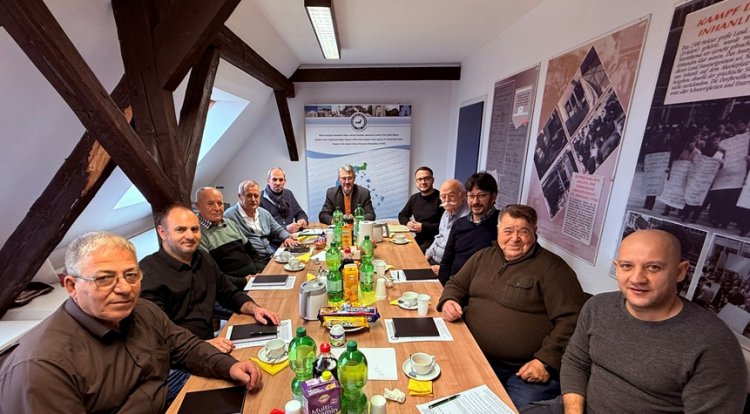
We paid a working visit to Strasbourg at the occasion of the Spring Session of the Parliamentary Assembly of the Council of Europe (PACE) on 20-22 April 2026.
There, we held a high-level meeting with PACE President Petra Bayr and outlined the key issues facing the Turkish Minority in Western Thrace.
In particular, upon learning that the European Court of Human Rights (ECtHR) judgments regarding the violation of our freedom of association—specifically in the Bekir-Ousta and Others group of cases —have not been executed for the past 18 years, the PACE President could not hide her astonishment.
Furthermore, after hearing that the Cultural Association of Turkish Women of the Prefecture of Xanthi—which had not been registered for the same reasons—had won its case at the ECtHR in 2025 while awaiting the execution of the ECtHR judgments, President Bayr asked questions to understand why the freedom of association of the Western Thrace Turks is violated, as the failure to execute the ECtHR judgments for 18 years in a democratic EU country is a rare occurrence.
Following the answers we provided to Bayr, it was clear that the real reason behind the non-execution of these judgments is political.
Indeed, we all know that our country has never pursued a policy of goodwill toward us, and it does not seem likely to do so.
Unfortunately, this has become our reality…
Given this situation, we are not going to sit idly by and wait for the day when our country adopts a benevolent stance.
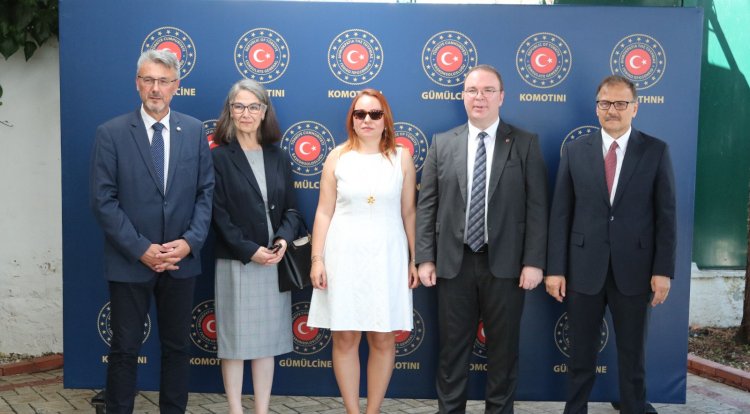
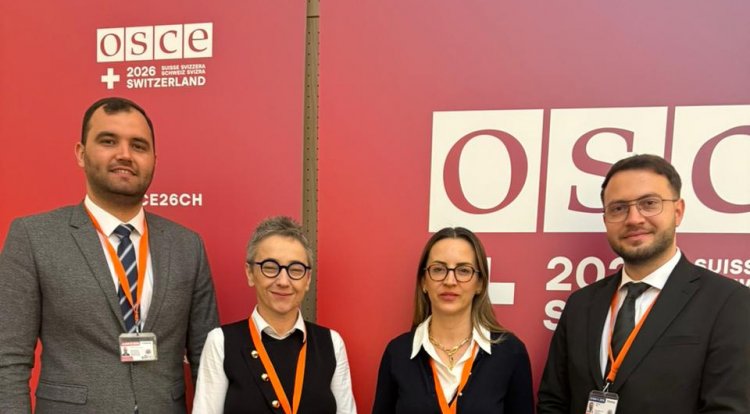
That is why we are in Strasbourg, Brussels, Athens, Geneva, Vienna, Warsaw, and wherever else our presence might be of benefit.
Indeed, prior to our visit to Strasbourg, we had another agenda item before the Council of Europe.
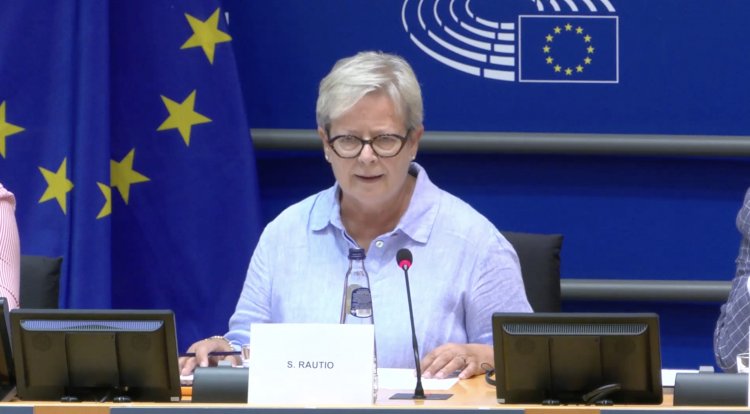
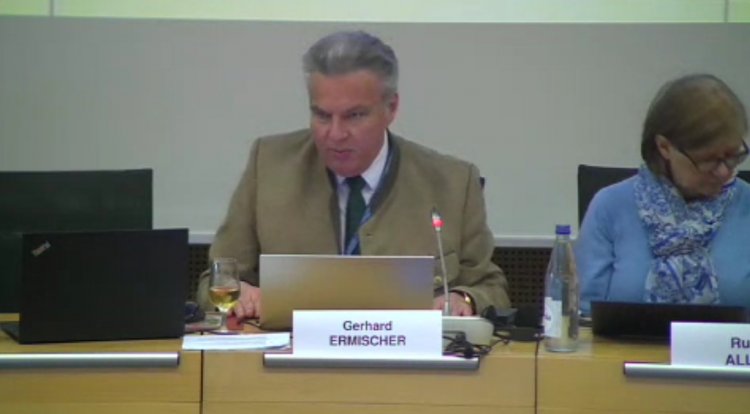
We participated in the General Assembly of the Conference of International NGOs (CINGOs), the body through which the Council of Europe coordinates its cooperation with civil society.
At the General Assembly, the CINGOs delegation’s report on Greece—following their visit to Athens and Komotini in November 2025—was discussed.
Jeremy McBride, President of the CINGOs-affiliated Expert Council on NGO Law, who prepared the report, shared his observations regarding the meetings he held with Greek authorities during the General Assembly.
McBride indicated that they had also discussed the freedom of association of the Western Thrace Turks with officials from the Greek Ministry of Foreign Affairs. He noted that regarding the issue of why the European Court of Human Rights (ECtHR) judgments were not being executed in the Bekir-Ousta group of cases, ministry officials argued about geopolitical reasons within the framework of relations with Türkiye.
Additionally, McBride stated that the proposed amendments to the Civil Code currently being prepared by Greece would not ensure the execution of ECtHR judgments under these conditions, as Greek authorities have explicitly stipulated that the aforementioned matter is of a political nature.
The Council of Europe’s agenda regarding Greece this year is quite packed.
This is because the Council of Europe’s independent body working on discrimination—the European Commission against Racism and Intolerance (ECRI)—was in Athens during the week of 20 April to prepare its 7th Report on Greece.
Before traveling to Athens, the ECRI delegation met with us as well; we conveyed the issues faced by the Western Thrace Turks for their inclusion in the upcoming report.
Additionally, the PACE Monitoring Committee will publish a report on Greece in 2027. PACE members Laura Castel and Miapetra Kumpula-Natri, who are the co-rapporteurs for this report, visited Athens on 27-29 April.
As a result of the lobbying efforts that we have been conducting at PACE for many years, we were also present during their meeting with NGOs in Athens.
Although our problems persist, we are waging a much more robust struggle for our rights than we did in the past.
We are now more widely recognised and known at the international level; our foreign counterparts listen carefully to our concerns and invite us to participate in consultation mechanisms with civil society organisations.
Of course, this didn’t happen overnight…
This was made possible through the dialogues we established during our visits to Strasbourg over the years and by setting up a professional working framework to maintain this dialogue.
As a result, we are being invited to Strasbourg, Western Thrace, and even Athens for various meetings.
We conduct detailed preparatory work for the meetings we are invited to, and during these meetings, we explain our issues in full detail.
Our country is still not acting in good faith; but politicians and bureaucrats from other countries have now also realised this.
As I have said many times before, our struggle may be a long and arduous path, but we continue to walk this path every day with determination and resolve, to the best of our ability, without giving up…
Yours sincerely,
Halit Habip Oğlu
ABTTF President