ECRI - Third report on Greece
Adopted on 5 December 2003 and made public on 8 June 2004
Foreword
The European Commission against Racism and Intolerance (ECRI) was established by the Council of Europe. It is an independent human rights monitoring body specialised in questions relating to racism and intolerance. It is composed of independent and impartial members, who are appointed on the basis of their moral authority and recognised expertise in dealing with racism, xenophobia, antisemitism and intolerance.
One of the pillars of ECRI's work programme is its country-by-country approach, whereby it analyses the situation as regards racism and intolerance in each of the member States of the Council of Europe and makes suggestions and proposals as to how to tackle the problems identified.
The country-by-country approach deals with all member States of the Council of Europe on an equal footing. The work is taking place in 4/5 year cycles, covering 9/10 countries per year. The reports of the first round were completed at the end of 1998 and those of the second round at the end of the year 2002. Work on the third round reports started in January 2003.
The third round reports focus on "implementation". They examine if ECRI's main recommendations from previous reports have been followed and implemented, and if so, with what degree of success and effectiveness. The third round reports deal also with "specific issues", chosen according to the different situations in the various countries, and examined in more depth in each report.
The working methods for the preparation of the reports involve documentary analyses, a contact visit in the country concerned, and then a confidential dialogue with the national authorities.
ECRI's reports are not the result of inquiries or testimonial evidences. They are analyses based on a great deal of information gathered from a wide variety of sources. Documentary studies are based on an important number of national and international written sources. The in situ visit allows for meeting directly the concerned circles (governmental and non-governmental) with a view to gathering detailed information. The process of confidential dialogue with the national authorities allows the latter to propose, if they consider it necessary, amendments to the draft report, with a view to correcting any possible factual errors which the report might contain. At the end of the dialogue, the national authorities may request, if they so wish, that their viewpoints be appended to the final report of ECRI.
The following report was drawn up by ECRI under its own and full responsibility. It covers the situation as of 5 December 2003 and any development subsequent to this date is not covered in the following analysis nor taken into account in the conclusions and proposal made by ECRI.
Executive summary
Since ECRI's second report on Greece was published in June 2000, progress has been made in a number of areas covered by the report. For example, the Ombudsman and the National Committee on Human Rights have contributed to the fight against racism and intolerance in Greece. Measures have been taken to combat the traffic in human beings. The Greek authorities have taken a stance against racism and for a multicultural society, particularly by reinforcing the network of intercultural schools. Progress is noted in the exercise of the religious freedom of minority religious groups. An integrated action programme aims to better the day-to-day life of the Roma. Equal opportunities programmes regarding access to education and employment have been planned for the Muslim minority in Western Thrace. Lastly, the situation of immigrants in Greece has been the focus of two legalisation procedures.
However, many of the recommendations contained in ECRI's second report have not, or not fully, been implemented. There remain stereotypes, prejudices and incidences of discrimination targeting members of minority groups, particularly the Roma community and minority religious groups, as well as against immigrants. Criminal law is not enforced to a sufficient extent to curb racist acts, and existing civil and administrative law provisions are insufficient to effectively prohibit discrimination. The position of the Muslim minority in Western Thrace should improve further. The situation of immigrants is a long way from being completely legalised, and there is still no comprehensive, targeted integration policy on immigration. The measures taken at national level to combat racism and intolerance are not always replicated at the local level.
In the current report, ECRI makes a series of recommendations to the Greek authorities. Specifically, it recommends that a number of international instruments of relevance to the fight against racism and intolerance be ratified. ECRI recommends that the Greek authorities strengthen legal provisions and their implementation in criminal, civil and administrative law to fight against racism and racial discrimination, and set up a specialised body to combat racism and racial discrimination. ECRI recommends to the Greek authorities to intensify their efforts to improve the situation of Roma, particularly in respect of housing, employment and education. It encourages the authorities to continue their efforts to improve the situation of members of other minority groups, including the Muslim minority in Western Thrace, the Macedonian community, the minority religious groups, as well as immigrants, refugees and asylum seekers. ECRI recommends continuing efforts to raise the awareness of civil servants, the general public and the media about human rights and the problem of racism and intolerance. Lastly, ECRI recommends legalising the situation of immigrants in Greece and strengthening policies aimed at their integration.
I. FOLLOW-UP TO ECRI'S SECOND REPORT ON GREECE
International legal instruments
1. In its second report on Greece, ECRI recommended that the authorities ratify the Framework Convention for the Protection of National Minorities as rapidly as possible, as well as the revised European Social Charter, the European Convention on the Legal Status of Migrant Workers and the European Convention on Nationality, all of these instruments having already been signed. It recommended signing and ratifying the UNESCO Convention against Discrimination in Education and the European Charter for Regional or Minority Languages. It furthermore encouraged the Greek authorities to make a declaration under Article 14 of the UN Convention on the Elimination of All Forms of Racial Discrimination, allowing individual communications to be considered by the Committee for the Elimination of Racial Discrimination.
2. ECRI regrets that since the adoption of the second report on Greece, no progress has been made with the signature or ratification of the aforementioned instruments, contrary to what had been announced regarding certain instruments at the time ECRI's second report was prepared. It is concerned to learn that the authorities, although they have signed the Framework Convention for the Protection of National Minorities, the revised European Social Charter and the European Convention on the Legal Status of Migrant Workers, have not ratified these instruments yet. The authorities have informed ECRI that the ratification of the Framework Convention for the Protection of National Minorities and the revised European Social Charter is under consideration. In addition, the authorities have not signified an intention to sign and ratify the UNESCO Convention against Discrimination in Education or the European Charter for Regional or Minority Languages. The authorities have nonetheless emphasised that the absence of ratification or signature of the international legal instruments relevant to the fight against racism and intolerance does not mean that Greek law fails to uphold the rights guaranteed by these instruments. ECRI considers that, such being the case, there should be nothing to prevent Greece from accepting the obligations provided for by these instruments, and that their ratification would demonstrate the determination of Greece to press ahead in fighting racism and intolerance. In this connection, ECRI is glad to learn that the authorities are about to ratify the European Convention on Nationality.
3. Greece has signed Protocol No. 12 to the European Convention on Human Rights. The Greek authorities have informed ECRI that ratification of the protocol should follow the enactment of an anti-discrimination law, scheduled to be adopted at the beginning of 2004. Greece also signed the Convention on Cybercrime on 23 November 2001 and the Additional Protocol to it concerning the criminalisation of acts of a racist and xenophobic nature committed through computer systems on 28 January 2003, but has not yet ratified these two instruments. ECRI notes that a committee has been set up to examine the changes in the legislation needed to permit the ratification of the Convention and protocol. Greece has not signed the United Nations Convention on the Protection of the Rights of All Migrant Workers and Members of their Families.
4. As concerns the declaration under Article 14 of the UN Convention on the Elimination of All Forms of Racial Discrimination, allowing individual communications to be considered by the Committee for the Elimination of discrimination, the authorities have informed ECRI that they will consider this matter in the context of work on the anti-discrimination law(1).
Recommendations:
5. ECRI strongly recommends that the Greek authorities ratify as soon as possible the Framework Convention for the Protection of National Minorities, as well as the revised European Social Charter, the European Convention on the Legal Status of Migrant Workers and the European Convention on Nationality. It also recommends that they sign and ratify the UNESCO Convention against Discrimination in Education and the European Charter for Regional or Minority Languages.
6. ECRI recommends that the Greek authorities swiftly ratify Protocol No. 12 to the European Convention on Human Rights, the Convention on Cybercrime and the Additional Protocol to the Convention on Cybercrime concerning the criminalisation of acts of a racist and xenophobic nature committed through computer systems, and sign and ratify the United Nations Convention on the Protection of the Rights of All Migrant Workers and Members of their Families.
7. ECRI strongly encourages the Greek authorities to make the declaration under Article 14 of the UN Convention on the Elimination of All Forms of Racial Discrimination.
Constitutional provisions and other basic provisions
- Citizenship law
8. In its second report, ECRI recommended that the Greek authorities do more to facilitate the restoration of citizenship to persons stripped of it under former Article 19 of the Citizenship Code. This article provided that Greek citizens who were not ethnically Greek could have their citizenship revoked if they left the country and the Greek authorities believed that they did not intend to return. It also requested the authorities to inform the general public and interested circles of the existence of cards for stateless persons pending the restoration of citizenship.
9. ECRI notes with concern information to the effect that, to date, there has been no redress for the serious consequences that arose from the deprivation of citizenship on the basis of Article 19. In particular, the repeal of Article 19 does not have a retroactive effect. Thus, the majority of those nearly 60 000 people, - the majority of whom belonged to the Muslim minority of Greece that is mostly of Turkish ethnic origin -, who were deprived of their citizenship, have not recovered it, whether resident abroad or in Greece. The residents abroad have no possibility to recover their citizenship. The other persons, whose number does not exceed 200 and who live in Greece, can recover their citizenship through regular naturalisation. These persons are expressing dissatisfaction over having to make a request for regular naturalisation in order to obtain Greek citizenship that they nevertheless used to possess, without being able to benefit from any facilitated procedures in this respect. It has been pointed out to ECRI that a procedure of this kind is long, expensive and uncertain as regards the outcome, and humiliating for persons who have wrongfully lost their citizenship.
10. ECRI is also concerned by reports that some persons, who have been deprived of Greek citizenship and have gone to live abroad, encounter difficulties when they want to return to Greece to visit family and places of former residence.
Recommendations:
11. ECRI strongly recommends to the Greek authorities that they take steps to ensure the immediate rectification of the unfortunate consequences arising from deprivation of Greek citizenship on the basis of former Article 19 of the Citizenship Code for all persons concerned, whether resident in Greece or abroad, whether stateless or holding another nationality. In particular, ECRI urges the authorities to genuinely facilitate these persons' recovery of their citizenship by obviating any obstacle, including the need for them to go through the naturalisation procedure.
Criminal law provisions
12. In its second report, ECRI supported the proposal to enable the prosecution to press charges ex officio in cases of offences of incitement to racial discrimination, hatred or violence and to allow associations to initiate civil proceedings in connection with these criminal charges. It encouraged the authorities to make express provision in the law for racist motivation to be considered as an aggravating circumstance in the case of all common offences.
13. ECRI notes with satisfaction that law no. 2910/2001 grants the public prosecutor the possibility of acting ex officio, and no longer solely on the complaint of an individual personally wronged, in respect of offences of incitement to racial discrimination, hatred or violence as provided in article 1 of law no. 927/1979. This amendment enables a prosecutor to take action upon learning of a potential offence, such as when alerted by organisations that defend human rights or that represent a group targeted by statements constituting incitement to racial hatred. There have been no further changes to legislation in the criminal sphere on prevention of racism and intolerance. The Greek authorities have informed ECRI that, according to the Criminal Code, the motives of the crime are taken into account when determining the sentence so that racist motives can be considered as aggravating circumstances. However, ECRI notes that the law does not expressly stipulate that for all ordinary offences, racist motivation constitutes an aggravating circumstance.
Recommendations:
14. ECRI recommends that the Greek authorities introduce a provision into criminal law expressly stipulating that for all ordinary offences, racist motivation constitutes an aggravating circumstance. In addition, it draws the attention of the Greek authorities to its General Policy Recommendation No. 7 on national legislation to combat racism and racial discrimination, indicating the provisions that should be included in criminal legislation.
15. In its second report, ECRI stressed the need to reinforce the effectiveness of legal measures through a range of policy measures that include raising the awareness of the police and the judicial authorities about the need to combat racism and discrimination and to take into account any racist motivation of the offences committed.
16. ECRI has been informed by the Greek authorities that since the adoption of the second report, there have been very few prosecutions and convictions under the criminal law provisions addressing racist offences, although a few exemplary penalties have been imposed. One of the explanations provided by the authorities to account for this situation is that such offences only constitute isolated cases in Greek society. However, ECRI is concerned over reports from non-governmental organisations indicating that racist incidents have occurred in Greece - including racist statements made in public or reported in the press, and acts of racist violence - and that such incidents have not been prosecuted or indeed given all due attention by the Greek authorities. This problem may not necessarily be the result of a deficiency in terms of criminal law provision, but rather of an interpretation of the notion of racism by certain judicial authorities, leading to either no charges being brought, or charges being dropped in these cases.
17. ECRI notes with interest the existence of "councils for crime prevention and addressing problems of criminality at local level". These councils consist of scientists, judges, police officers, social workers, doctors and representatives of the active population. They are appointed for three years and are unpaid. One of the tasks assigned to these councils since 2002 is to plan and promote special actions to combat racism and xenophobia. With the support of specialised organisations, they are also to encourage the raising of citizen awareness about crime prevention and set up assistance and information networks for crime victims. ECRI considers that such initiatives should be furthered, in order to provide concrete assistance to victims of racist acts. Victims are often without means in respect of the crimes committed against them, and assistance would be of great value to them, particularly in lodging a complaint with the police. The role of associations is fundamental in this context, and ECRI stresses that they must be given all possibilities to assist victims and file suit for damages when a racist offence is prosecuted.
Recommendations:
18. ECRI recommends that the Greek authorities closely examine the implementation of criminal law provisions against racism so as to discern the reasons that they are only sparsely applied, and take appropriate measures to ensure their full application. In this respect, it draws attention to its General Policy Recommendation No. 7 on national legislation to combat racism and racial discrimination.
19. ECRI encourages the Greek authorities to facilitate the lodging of complaints with the police or the judicial authorities by persons considering themselves to be victims of racism or discrimination, by such means as bolstering the confidence of members of vulnerable groups in these institutions. A possible modus operandi would be to designate civil servants specialised in combating racism, as responsible for receiving such complaints. Such persons should be specially trained to identify the racist motives, if any, of an offence. ECRI stresses that the role of human rights associations could be enhanced in this area.
20. ECRI deems it necessary to pursue and intensify the human rights training provided to the police, prosecutors and judges. These officials should also be given an appreciation of problems of racism, cultural diversity, and the need to verify, on each occasion, whether or not an offence has a racist character in order to take appropriate action.
Civil and administrative law provisions
21. In its second report, ECRI encouraged the Greek authorities to look into the possibility of introducing a comprehensive body of anti-discrimination legislation covering discrimination in all fields of life.
22. ECRI notes with interest that the Greek authorities have prepared a bill in order to transpose into domestic law Directive 2000/43/EC of the Council of the European Union implementing the principle of equal treatment between persons irrespective of racial or ethnic origin and Directive 2000/78/EC of the Council of the European Union establishing a general framework for equal treatment in employment and occupation. This bill is to be debated in Parliament by the end of 2003. According to information supplied to ECRI the bill outlaws direct and indirect discrimination in all the fields of life covered by the Directives, and introduces certain mechanisms aimed at punishing discrimination(2).
23. ECRI notes that a debate is underway regarding the difficulty of translating into Greek the expression "ethnic origin" set out in Directive 2000/43/EC. ECRI stresses that in order to appropriately reflect its full meaning, this expression must be understood as distinct from a person's citizenship and as covering discrimination of any kind against persons of Greek citizenship, but of different ethnic origin, such as Roma or other members of minority groups.
Recommendations:
24. ECRI recommends that the Greek authorities adopt comprehensive legislation against racial discrimination as swiftly as possible. It hopes that the many positive points in the European Union Directives will be entirely transposed into domestic law, such as the principle of sharing the burden of proof in civil and administrative law and the creation of a specialised independent body to prevent discrimination.
25. ECRI urges the Greek authorities to incorporate into this legislation the substance of all relevant guidelines given in its General Policy Recommendation No. 7 on national legislation to combat racism and racial discrimination. In particular, ECRI strongly recommends extending the prohibition of discrimination to all areas of life, whether a natural or a legal person is responsible for the discrimination, and whatever the sector - public or private - in which that person operates.
26. ECRI strongly encourages the Greek authorities to involve the human rights organisations active in this field in the debate on the adoption of a law against discrimination by requesting their opinion on the draft text of the law. It invites the authorities to take full account of any recommendations made by these NGOs.
Administration of justice
27. In its second report, ECRI urged the Greek authorities to ensure complete respect for the rights of all non-citizens to benefit from guarantees of due process, including access to a lawyer, and to understand the proceedings to which they are party. ECRI also expressed its hope that a study would be carried out of the best way to provide legal aid to victims of racist or discriminatory acts.
28. ECRI expresses its concern over information provided by human rights organisations indicating that progress in the sphere of the administration of justice remains slight. Although the authorities assured ECRI that the right to an interpreter was widely enforced, a variety of sources have indicated that this right is not genuinely guaranteed, either because the judge does not summon an interpreter despite the inability of the person before the court to speak or to understand Greek, or because the interpreter in question is not adequately qualified to perform the task properly or given financial incentive to take on this work.
29. ECRI notes with satisfaction that the law on reinforcement of legal aid is about to be passed and will constitute a major advance. However, ECRI is most disturbed to learn that the terms of the draft restrict the grant of legal aid to Greek citizens and to non-citizens holding a residence permit. Considering the position in which the great majority of non-citizens are placed in Greece(3), this excludes a sizeable category of the population, namely asylum seekers and non-citizens whose situation is not in order or is still being legalised. Moreover such persons are particularly vulnerable to racism and discrimination. ECRI considers that free legal aid should be guaranteed to any person before the courts, irrespective of legal status, when unable to finance the proceedings personally.
Recommendations:
30. ECRI strongly encourages the Greek authorities to ensure that any person put before a Greek court is provided with adequate assistance from an interpreter and that free legal aid is extended to members of vulnerable groups, such as asylum seekers and non-citizens, whose situation is not in order or is being legalised.
31. In its second report, ECRI noted allegations of differences between the sentences handed down to foreigners and those handed down to Greek defendants convicted of comparable crimes. Since ECRI's second report, some non-governmental organisations have continued to report instances of this phenomenon. ECRI also encouraged the Greek authorities to carry out research on the causes of the high representation of foreigners in the overall prison population of Greece. The Greek authorities have informed ECRI that research in this field has been carried out and, to their opinion, has shown that no discrimination against foreigners was taking place before courts.
Recommendations:
32. ECRI suggests that the Greek authorities look into the allegations concerning differential treatment with respect to sentences. ECRI encourages the Greek authorities to carry out further research on the treatment of foreigners before the courts and in prison in order to identify any possible discrimination.
Specialised bodies and other institutions
33. In its second report, ECRI encouraged the Greek authorities to create an independent body specialised in combating racism and racial discrimination. It also welcomed the existence of the Greek Ombudsman and the National Human Rights Committee, and expressed its hope that the Committee's work would focus especially on combating discrimination and intolerance.
34. The Ombudsman has been active for some years now, and ECRI observes that this institution represents an significant step forward in the protection of the rights of all persons in Greece. The Ombudsman, whose independence was set down in law through the revision of the Constitution in 2001, has condemned human rights violations by public bodies in respect of members of minority groups. He has paid particular attention to the situation of Roma and immigrants, settling many individual cases, but also putting forward more general solutions. The Human Rights Committee only commenced its activities in the year 2000, but ECRI wishes to stress the Committee`s already undeniable contribution to the fight against racism and intolerance, particularly by way of proposals for legislative amendments and human rights training for broad segments of society.
35. These two independent organs have done much to combat racism and discrimination but the scope of their task, which bears on all human rights, and the necessary limits of their mandate, mean that a specialised body still needs to be set up in Greece to specifically combat racism and racial discrimination. ECRI notes that Directive 2000/43/EC(4) places an obligation upon Member States of the Union to set up a body to promote equal treatment whose role is to provide independent assistance to victims of discrimination, to conduct independent surveys, to publish reports and to make recommendations on any issue relating to such discrimination.
36. The Greek authorities have informed ECRI that the draft anti-discrimination law at this stage provides for the setting up of a committee which will be answerable to the Ministry of Justice, that will be mandated to deal with discrimination in the provision of goods or services. It will be able to conduct investigations and call upon the competent authorities, such as the administrative authorities or the prosecution, to punish the acts of discrimination identified. As concerns discrimination that may occur in the labour market, the labour inspectors will have competence, while the Ombudsman will be designated as the competent authority in cases of discrimination by public authorities. ECRI stresses that the adoption of the anti-discrimination law should provide an opportunity for thorough reflection on the expediency of creating one or more bodies to combat not only racial discrimination but also other expressions of racism. Such a body absolutely must have independence on a par with the Ombudsman and be granted the capacities necessary to assist victims of racism and racial discrimination in an effective manner. In so far as cases of discrimination are particularly frequent in employment, for example at recruitment, ECRI draws attention to the need to ensure that the labour inspectorate which deals with all infringements of the labour law is adequately equipped and specialised to intervene effectively in aid of victims of discrimination.
Recommendations:
37. ECRI strongly encourages the Greek authorities to set up in a near future an independent body specialised in and focussing on combating racism and racial discrimination, with due regard to ECRI's General Policy Recommendation No. 2 on specialised bodies for combating racism, xenophobia, antisemitism and intolerance at national level, and General Policy Recommendation No. 7 on national legislation to combat racism and racial discrimination.
38. ECRI particularly emphasises the need to guarantee to this body complete independence, as well as the legal capacities and the human and financial resources necessary for it to provide the requisite assistance to the victims of racism and racial discrimination. In this respect, it is important to provide for branches throughout Greece so as to make this body accessible to all potential victims.
Access to public services and employment
39. In its second report, ECRI invited the Greek authorities to consider adopting anti-discrimination legislation to ensure that members of vulnerable groups would not be subject to discrimination in inter alia employment.
40. ECRI observes that in the absence, so far, of comprehensive legislation prohibiting discrimination and promoting equality, the risks of discrimination remain significant, and notes that members of various minority groups, particularly Roma and immigrants, have complained of discrimination. In practice, it happens that the authorities, above all those at local level, are reluctant to grant persons belonging to these minority groups the rights and advantages to which they are nonetheless entitled by law. ECRI notes with concern the presence in national newspapers of blatantly discriminatory real estate rental advertisements or job offers specifying "no foreigners"(5). Although these advertisements have been the subject of complaints by NGOs and proceedings have been instituted, nobody has been penalised. Nevertheless, some newspapers have agreed to make sure no further advertisements of this kind are published in future. ECRI is pleased with this, and hopes that the future law to combat discrimination will allow such discrimination to be unequivocally prohibited(6).
Recommendations:
41. ECRI strongly encourages the Greek authorities to review all legislation and practice regarding access to public services such as health and state allowances, together with access to employment, so as to identify and eliminate whatever discrimination may exist.
42. Efforts should also be directed towards heightening awareness among civil servants in all public departments regarding the prohibition of discrimination, as well as to finding means of motivating them to more effectively fight against discrimination. Those who have committed acts of discrimination should be appropriately sanctioned.
Education(7)
43. In its second report, ECRI recommended that the Greek authorities take steps to promote human rights education, focusing lessons in schools on issues of tolerance and respect for cultural diversity. It also encouraged the Greek authorities to introduce courses of Albanian for Albanian immigrant pupils.
44. The Greek authorities have informed ECRI that in April 2003, the first cultural programme between Albania and Greece was signed. This programme is entitled "teaching the Greek language to Albanians".
45. ECRI notes that the authorities have undertaken measures to strengthen appreciation of cultural diversity at school, in particular by establishing a system of intercultural schools where specially trained teachers teach to Greek and immigrant pupils together. However, according to certain sources the results of these schools are still deemed insufficient and the programmes should be improved. The number of such schools is far short of meeting the demand. The authorities are aware of the gaps in the intercultural education system and are taking remedial measures. Pending the supply of teaching material more suited to the multicultural dimension of the Greek population, measures have been taken to sensitise teachers to the need to instil respect for differences.
46. As regards access to education, Roma children encounter major difficulties associated with the general difficulties which beset the Roma community in Greece(8). Those living in camps removed from the majority population are not always provided with adequate means of transport for travelling to school and do not always have access to schools of an adequate educational standard. The Greek authorities have addressed this problem in their programme for the social integration of the Roma(9). ECRI deplores the fact that parents of Greek children sometimes adopt a negative attitude towards the presence of Roma and immigrant children in the schools attended by their children, to the point of pressuring the school authorities to refuse children from minority groups, or to place their children in another school. These parents are particularly afraid that a fall in the standard of teaching may result from the presence of Roma or immigrant children. Furthermore children whose mother tongue is not Greek still do not benefit from any measure - except in Western Thrace - enabling them to learn their mother tongue at school.
Recommendations:
47. ECRI strongly encourages the Greek authorities to press ahead with their efforts of intercultural education, particularly by sensitising the teaching staff of all schools to the importance of respect for differences. Staff should also be provided with training that will enable them in turn to raise the awareness of the pupils and pupils' parents so as to avoid prejudice against pupils from minority groups.
48. ECRI strongly recommends that the Greek authorities foster equal opportunities in access to education for children from minority groups by organising, inter alia, support courses of Greek language, backup courses, and mother tongue education for the children concerned.
Reception and status of non-citizens(10)
- Refugees and asylum seekers
49. In its second report, ECRI recalled that asylum seekers ought not to be treated as criminals. It noted that some potential asylum risked deportation before having had the time to lodge an official asylum request.
50. The number of asylum requests increased in 2001 and 2002, particularly because of the large number of requests from Iraqis and Afghans. ECRI is concerned about the very low success rate (1%) of requests for refugee status or humanitarian status in 2002. The authorities have explained that this very low rate results from the backlog of asylum request procedures before the courts, considerably delaying the moment when status is granted. Nonetheless the Office of the United Nations High Commissioner for Refugees (UNHCR) has stressed that such a low percentage could mean that bona fide refugees are left unprotected and run the risk of forced returns to their countries of origin with the tragic effects on their lives which may ensue.
51. ECRI notes with satisfaction that decree no. 61/1999 on recognition of refugee status, is generally regarded as an advance in asylum law in Greece although improvements continue to be necessary. Progress has also been achieved with respect to reception centres for asylum seekers, even though here too it seems that significant efforts remain necessary as regards both capacity and conditions of accommodation. The authorities have informed ECRI that training courses are organised, particularly for the police, coastguard and judges concerning the asylum application procedure. These seminars are also designed to enable the law enforcement officials to distinguish between economic migrants and refugees. ECRI is pleased to learn that asylum seekers are eligible for free medical aid and entitled to work during the asylum request procedure. In addition, there are integration programmes for asylum seekers organised with NGO co-ordination, including Greek language courses and vocational training.
52. ECRI is disturbed by information to the effect that asylum seekers encounter excessive obstacles accessing the asylum procedure in Greece. For instance, these persons are not always adequately informed of their right to lodge an asylum request, particularly when detained. ECRI is particularly concerned to learn that in some regions the lapse between the time when a person reports to the foreigners' police to lodge an asylum request and the actual registration of the request may exceed 6 months, or even considerably longer in the frequent cases where the date of the appointment is repeatedly deferred. Moreover, as long as the actual registration of the request has not been effected, the person does not receive the document issued to asylum seekers legalising their situation and granting them the right to work and to receive certain assistance such as medical aid. This problem is apparently linked with a sore lack of financial resources and staff to register asylum requests. It is certainly also due to the staff's lack of training as to the rights of asylum seekers. ECRI has been informed that certain measures have been taken in this respect such as the increase of the staff in the relevant police departments and the organisation of seminars for the specialisation of such staff on the asylum procedure.
53. While the UNHCR representatives have satisfactory access to the detention centres, apparently the same does not go for the human rights organisations or the legal advisers. The Greek Ombudsman has interceded several times with the competent authorities to remind them of their duty to co-operate with the NGOs and to assist their access to detention centres when they request it. ECRI notes that a circular (No. 4803/22/44) was issued on 4 July 2003 by the head of the police force on the treatment and the rights of persons detained by police authorities, where it is expressly stated that NGOs active in the area of human rights can have access to detention centres.
Recommendations:
54. ECRI strongly recommends that the Greek authorities commit all the necessary human and financial resources to overcome the existing deficiencies in the asylum procedure. It is advisable in particular to increase the staff responsible for initially receiving asylum requests in order to avert undue delays in the consideration of the requests. ECRI also recommends to the authorities to provide all staff coming into contact with asylum seekers with training in human rights and information about the problems encountered by asylum seekers in order to ease the formalities required of them.
55. ECRI strongly recommends that the authorities continue and strengthen their co-operation with the UNHCR and the NGOs working for asylum seekers, and allow the latter organisations genuine and satisfactory access to the detention centres.
- Trafficking in human beings
56. ECRI notes that Greece is a country of destination and of transit for the traffic in human beings. Women and children coming from neighbouring countries such as Albania, but also from more distant countries, are especially affected. ECRI notes with satisfaction that Greece has taken steps to combat trafficking in human beings, particularly by adopting law no. 3064 of 15 October 2002 on the fight against trafficking in human beings and presidential decree 233/2003 on the protection of victims of trafficking for purposes of enslavement or prostitution. In April 2001, the Ministry of Public Order established the Team for Combating Trafficking in Human Beings (O.K.E.A.), an inter-ministerial project management team headed by the chief of the police force. These and other measures are intended to stiffen both the punishment of the culprits of the traffic in human beings and the protection of its victims.
57. However, according to certain sources the situation remains disturbing as regards trafficking, in women for prostitution, but also in children - Albanian nationals who are subjected to forced labour. Children over 12 that are arrested by the police are considered as illegal immigrants in an irregular situation that must be deported, rather than as victims of the traffic in human beings. Children under 12 are placed in reception centres until their families can be located. ECRI is concerned over allegations that several hundred Albanian children placed in state-run reception centres disappeared from the centres in 2002. It may be that some of them have once again fallen into the hands of the traffickers who brought them into Greece.
Recommendations:
58. ECRI recommends that additional measures be taken to counter the problem of trafficking in women and children, particularly by carrying out preventive and awareness-raising measures about this serious problem that aim at all segments of the population concerned. In particular, ECRI encourages the Greek authorities to persist in their new approach of protecting the victims of trafficking in human beings and effectively penalising the traffickers.
59. ECRI strongly encourages the authorities to investigate the situation of Albanian children brought to Greece to work, and to take all the necessary steps to ensure that the children, once identified, receive effective subsequent protection against any other form of abuse.
- The distinction between non-citizens of Greek origin and other non-citizens
60. ECRI notes that in a number of spheres Greek law draws a distinction between non-citizens of Greek origin (sometimes called "homogeneis") and non-citizens of another origin (sometimes called "allogeneis"). This difference in treatment generally takes the form of a privileged status for persons of Greek origin.
61. For example, in 1982 a regulation permitted the return to Greece of people having fled the country during the 1946-1949 civil war, together with their families. However, this regulation applied solely to persons "of Greek origin", thus excluding persons of non-Greek, and particularly Macedonian, origin who had nonetheless left Greece under the same conditions(11).
62. The formalities for naturalising non-citizens provided by law no. 2910/2001 on foreigners' entry to and residence on Greek territory, acquisition of citizenship and other provisions are very different depending on whether or not the person is of Greek origin. For instance, the condition of having resided for 10 years in Greece before becoming eligible for naturalisation does not apply to persons of Greek origin. Nor are they required to pay the 1 500 euros fee for processing the application.
63. ECRI also notes that a programme for the social integration of persons belonging to vulnerable groups, introduced by the Labour Ministry, is aimed specifically at "repatriated persons of Greek origin", Roma and Greek Muslims, and includes instruction in the Greek language. While welcoming the determination to take positive measures to promote equal opportunities for groups suffering from de facto inequality, ECRI is concerned that no explicit mention is made, in this and other programmes, of immigrants not of Greek origin, who certainly encounter as many, if not more, problems than the "homogeneis" over integration, particularly as regards learning the Greek language.
64. The traditional policy of Greece, which is to confer a special status on non-citizens of Greek origin, in particular by issuing them a special identity card that carries eligibility for specific welfare benefits though without securing them Greek citizenship, is resented as discriminatory and as raising numerous legal problems and creating unease among the population. The criteria for ascertaining whether a person is of Greek origin include subjective elements and vary according to the legislation in question. The immigration wave of the 1990s aggravated the difficulties in this field particularly as the number of immigrants requesting a "homogeneis" card suddenly increased. In addition, at a time when the situation of immigrants in Greece was being legalised, rumours were spread to the effect that only unauthorised immigrants of non-Greek origin were liable to be deported(12). More generally, such differentiated approaches give rise to a sense of exclusion and frustration amongst persons who are not of Greek origin, but apparently also amongst non-citizens of Greek origin, who expect their status to afford them many advantages to which they may not be entitled.
Recommendations:
65. Considering that the creation of an intermediate "non-citizen of Greek origin" status between that of Greek citizen and non-citizen not of Greek origin might cause discrimination based on ethnic origin, ECRI strongly recommends to the Greek authorities to reconsider the foundations and the implications of their policy in this respect. It must be ensured that non-citizens who are not of Greek origin can receive the same advantages as non-citizens of Greek origin.
Vulnerable groups
- Roma
66. In its second report, ECRI drew the attention of the Greek authorities to the situation of the Roma, highlighting in particular problems of eviction from their dwellings and of discrimination in access to public services. ECRI also stressed the importance of overcoming local resistance to initiatives that benefit Roma.
67. ECRI notes with concern that since the adoption of its second report on Greece, the situation of the Roma in Greece has remained fundamentally unchanged and that overall they face the same difficulties - including discrimination - in respect of housing, employment, education and access to public services. As concerns housing in particular, there still remain numerous Roma camps removed from all infrastructure in which the Roma live under unacceptable conditions. This is true, for example, of the Aspropyrgos camp near Athens. At the end of 2002 the Greek authorities informed the Commissioner for Human Rights of the Council of Europe that "all necessary measures have been taken in order that the Roma/Gypsy settlement of Aspropyrgos is provided with all public facilities"(13). Having visited the spot, it can nevertheless be ascertained that in October 2003 the people living in this camp had not been re-housed and the authorities had still not provided them with access to running water or electricity. Moreover, they are under constant threat of expulsion without any alternative accommodation being offered to them. The Spata camp near Athens is clearly situated on a giant waste site covered only by a layer of earth a few centimetres high. Roma that were expelled from their camps were resettled in prefabricated houses at Spata by the authorities. This camp is still not connected to electricity or running water, three years after the relocation. This situation poses inter alia serious health problems, particularly for the children who live in the camp.
68. ECRI is concerned over allegations that forcible collective evictions of Roma families have taken place without any resettlement alternative being proposed. ECRI finds especially alarming reports to the effect that some of these evictions are unlawful and/or are followed by immediate destruction of the camps by bulldozer, despite the fact that all the personal possessions of the families remain there.
69. ECRI welcomes the fact that the government has taken significant steps to improve the living conditions of Roma in Greece. It has set up an inter-ministerial committee for improving the living conditions of Roma. The committee drew up an integrated action programme for Greek Roma for the period 2003-2008, for which substantial funds have already been released with more to follow. This ambitious programme covers the sectors of housing, employment and vocational training, education, health and social assistance, culture and sport. Prefabricated houses have already been built in certain regions and loans have been made to members of the Roma community for buying houses. Healthcare centres are to be built near the dwelling places of Roma. ECRI is pleased to learn of cases of resettlement of Roma families which proceeded in a satisfactory manner in various regions of Greece; the families now live in houses of an altogether satisfactory standard. The Greek authorities have informed ECRI about the setting up of an inter-municipal Roma network of communication, with the participation of all local/municipal authorities within the periphery of which a significant number of Roma is registered.
70. ECRI nonetheless considers that considerable efforts have yet to be made by the authorities if the living conditions of Roma are to improve substantially in Greece. While noting the political will openly displayed by the government to take appropriate action, ECRI stresses that it is necessary to implement this national policy at the local level. In this connection, ECRI deplores the many cases of local authorities refusing to act in the interests of Roma when they are harassed by members of the local population. It is also common for the local authorities to refuse to grant them the rights that the law guarantees to members of the Roma community to the same extent as to any other Greek citizen. It is highly revealing to read in the press of the racist statements against Roma made by local elected representatives, apparently with complete impunity.
Recommendations:
71. Welcoming the adoption of the integrated action programme for Greek Roma, ECRI strongly encourages the Greek authorities to implement the programme in full, particularly by providing all the requisite financial resources.
72. ECRI strongly recommends that the Greek authorities maintain and increase their efforts to end all the direct or indirect discrimination suffered by the Roma.
73. ECRI urges the Greek authorities to raise the awareness of local authorities, such as municipalities or local administrative agencies, to the need to respect the rights and the culture of the Roma. It strongly recommends to the Greek authorities to impose sanctions on municipal councillors who make racist remarks or do not comply with the regulations and decisions that bind them.
- Minority religious groups
74. In its second report, ECRI drew attention to difficulties encountered by minority religious groups in their religious practice, and took the view that considerable efforts were still required to guarantee their full enjoyment of freedom of religion and to promote a climate of tolerance. ECRI in particular called for the removal from Greek identity cards of any reference to religion.
75. ECRI notes that progress has been achieved with respect to religious freedom in Greece. Since 2001 religion is no longer mentioned on identity cards, and persons who still have an identity card making mention of their religion may ask for a replacement. Prosecutions founded on the criminal law provision banning proselytism have ceased or at least have not resulted in any convictions. Progress is also noted in the matter of permits for places of worship.
76. Human rights organisations nevertheless point out that religious intolerance by members of the dominant religion remains a problem. Members of minority religions continue to suffer from prejudice, stereotyping and discrimination. Where freedom as to religious practice is concerned, cremation of dead bodies is still not permitted in Greece. ECRI notes that Muslims living outside of Western Thrace still do not have appropriate sites in the cemeteries for burial in accordance with their traditions. There is still no official Mosque in Athens despite the substantial number of Muslims who live there since the recent immigration wave. ECRI notes the existence of a decree, enacted in 2000, providing for the allocation of 33.420 square meters of land in the municipality of Peania, for the erection of an Islamic Cultural Center and a Mosque, but also notes that the plan to build the Mosque there has given rise to objections from both the local population, who claim that there are no Muslims living in the sector concerned, and from Muslims living in Athens, who consider that the Mosque would be located too far away from the city.
Recommendations:
77. ECRI encourages the Greek authorities to pursue their course of liberalising religious practice. In this connection, it suggests that, for greater clarity, the criminal law provision banning proselytism be repealed.
78. ECRI urges the Greek authorities to spare no effort to educate the population in religious tolerance and to end all stigmatisation or discrimination of a religious nature.
79. Lastly, ECRI hopes that all issues relating to minority religious practices, such as Muslim plots in cemeteries, the Mosque in Athens and the ban on cremation, will be swiftly settled in consultation with the main parties concerned and in strict respect of the religious freedom of all parties.
- Macedonians and other minority groups
80. In its second report, ECRI encouraged the authorities to ensure that all groups in Greece, Macedonians and Turks included, could exercise their rights to freedom of association and freedom of expression in accordance with international legal standards.
81. ECRI notes that the Greek authorities are more ready to recognise the existence of minority groups in Greece, such as the Pomaks or the Roma, including the fact that certain members of these groups have a native language other than Greek. However, other groups still encounter difficulties, the Macedonians and Turks for example. Even today, persons wishing to express their Macedonian, Turkish or other identity incur the hostility of the population. They are targets of prejudices and stereotypes, and sometimes face discrimination, especially in the labour market. In the Sidiropoulos and others v. Greece judgment of 10 July 1998, the European Court of Human Rights found that the refusal to register the association "Home of Macedonian Civilisation" constituted an interference with the freedom of association as guaranteed by Article 11 of the European Convention on Human Rights. ECRI deplores the fact that, five years after the decision of the European Court of Human Rights, this association has still not been registered despite the repeated applications made by its members. ECRI notes that similar cases are currently before the Greek courts concerning registration of associations whose title includes the adjective "Turkish".
82. ECRI stresses that the authorities took a first positive step on the path of reconciliation by opening their borders for a few days during the summer of 2003 to persons of Macedonian origin compelled to leave Greece in the civil war when most were only children. ECRI nevertheless deplores the fact that persons holding a passport in which the name of their birthplace in Greece was indicated in the Macedonian and not the Greek form were refused entry to Greek territory.
83. ECRI notes that representatives of the Macedonian community have asked the authorities to recognise their right to self-identification, as well as the existence of a Macedonian national minority in Greece. They have also called for the ratification of the Framework Convention for the Protection of National Minorities and of the European Charter for Regional or Minority Languages, considering that this step could improve their situation in Greece(14).
Recommendations:
84. ECRI encourages the Greek authorities to take further steps toward the recognition of the freedom of association and expression of members of the Macedonian and Turkish communities living in Greece. It welcomes the gesture of reconciliation made by the Greek authorities towards the ethnic Macedonian refugees from the civil war, and strongly encourages them to proceed further in this direction in a non-discriminatory way.
85. ECRI also recommends that the Greek authorities closely examine the allegations of discrimination and intolerant acts against Macedonians, Turks and others, and, if appropriate, take measures to punish such acts.
86. ECRI strongly recommends the Greek authorities to open a dialogue with the Macedonians' representatives in order to find a solution to the tensions between this group and the authorities, as well as between it and the population at large, so that co-existence with mutual respect may be achieved in everyone's interests.
- Muslim minority in Western Thrace
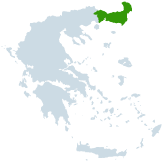
87. In its second report, ECRI recommended that the Greek authorities continue taking measures to improve the situation of the Muslim minority in Western Thrace, the majority of whom identify themselves as Turks, particularly regarding the management of private charitable foundations, the appointment of Muftis, and the educational system(15).
88. In the last few years, the situation of the Muslim minority in Western Thrace has improved, mainly particularly with respect to the religious freedom of members of this minority. There are numerous Turkish-language newspapers and other media, and significant measures have been taken by the government to raise the standard of education in Western Thrace, whether in ordinary schools or in minority schools. At the request of pupils' parents, the Greek authorities have set up nursery schools to provide the possibility of learning Greek to the children who speak Turkish, Pomak or Romani, as their mother tongue. In primary schools, pupils may take backup lessons in Greek as a second language, and to this purpose teaching material has been developed, distributed and put already into use. The 0,5% quota, which was introduced for the Muslim minority in universities, is generally recognised as a successful measure.
89. However, much remains to be done if the situation of the Muslim minority in Western Thrace is to become wholly satisfactory. The issue of the elections of the managing committees. The issue of the appointment of Muftis remains pending, although debates are currently in progress taking place, particularly over the question whether the possible election of Muftis would be compatible with their present judicial functions. The region is suffering from an economic crisis, especially in the mountainous part, and this creates problems of access to employment. In this connection, ECRI welcomes the fact that the Greek authorities have plan to introduce a programme aimed at promoting equal opportunities in access to employment for members of the Muslim minority in Western Thrace. Other private initiatives focus on access to employment and to public life for the Muslim women of the region who are particularly disadvantaged in this respect chiefly because they lack sufficient command of the Greek language. Education is the main area where great strides have still to be made. In general, the educational standard of the minority schools is considered too low, and the teachers are not adequately trained to teach in either Greek or Turkish. Children from the Muslim minority of Western Thrace who attend those schools do not have the same chances of succeeding in the education system as children from the majority population, and this is a situation that has repercussions on subsequent employment opportunities. The authorities are aware of this problem and have established an equal opportunities programme for children from this minority.
Recommendations:
90. ECRI encourages the Greek authorities to continue carrying out measures to promote equal opportunities in education and employment for members of the Muslim minority in Western Thrace, paying special attention to the situation of Muslim women living in this region. Such equal opportunity measures should include Greek lessons for adults and children.
91. ECRI strongly urges the Greek authorities to hold a dialogue with the members of the Muslim minority in Western Thrace in order to find satisfactory solutions concerning issues such as the appointment of Muftis and the election of the managing committees of private charitable foundations.
92. ECRI recommends that the Greek authorities devote even more attention to remaining deficiencies in education in the Western Thrace region and that they remedy them as soon as possible.
Antisemitism
93. In its second report, ECRI encouraged the Greek authorities to keep under review the development of the situation regarding antisemitic statements occurring in the media and in public debates.
94. The recent growth of violence in the Middle East has caused an increase in antisemitic acts in Greece. These include some acts of vandalism of Jewish cemeteries and synagogues and desecration of monuments erected in memory of the Holocaust. Antisemitic statements have been published in the press. It is not uncommon to read or hear statements that draw disturbing parallels between the Jewish communities of Greece, the policy of Israel, and Nazism. Public opinion sometimes reflects the prejudices and stereotypes expressed against the Jewish communities of Greece, by the media or public figures. Though in some cases the judicial authorities have taken measures to counter expressions of antisemitism, in other cases the criminal law provisions against hate speech have not been applied. ECRI notes that according to certain sources the government adopts a clear stance against antisemitic acts, however, according to other sources it should adopt a firmer stance on this issue to show the general public that such acts are prohibited. ECRI welcomes the fact that responding to a request by the Jewish community in Thessaloniki, the Greek Foreign Minister proposed the 27th of January as a national day for the commemoration of the Holocaust as it occurred in Greece during the Nazi occupation. The relevant bill has already been adopted by the Greek Parliament (Law 12/27-1-2004).
Recommendations:
95. ECRI recommends that the Greek authorities closely monitor the situation regarding antisemitic acts and statements, and take all necessary awareness-raising and punitive measures in order to put a stop to these acts.
Media
96. ECRI notes that some media express certain prejudices and negative stereotypes towards members of minority groups such as Roma, Jews, immigrants -especially Albanians - refugees and asylum seekers, as well as members of other minority groups. The statements in question are sometimes tolerated by the judicial authorities on the name of freedom of expression. While attaching great importance to this fundamental right, ECRI stresses that in light of the caselaw of the European Court of Human Rights and Greek criminal law (see section 1-3 of law no. 927/1979), the principle of freedom of expression does not extend so far as to authorise the publication of racist statements.
97. Circular No 21979/13.2003 of the Ministry of the Press and Media aims at increasing the awareness of professionals working in the media against racism and xenophobia, and it has been widely accepted by them. As an example, the Association of Publicity and Communication Companies of Greece has informed all its members about the content of the circular and asked them to respect the national legislation on racism and xenophobia.
Recommendations:
98. ECRI recommends that the Greek authorities alerting media professionals to the dangers of racism and intolerance. In cases where racist articles have been published, it strongly encourages the Greek authorities to take every step to prosecute and punish the culprits.
Climate of opinion
99. In its second report, ECRI encouraged the Greek authorities to take measures to raise the awareness of the Greek to the benefits of a multicultural society.
100. ECRI considers that many of the problems encountered by groups exposed to racism and intolerance stem directly from the majority population's attitude towards them. When the national authorities contemplate taking measures conducive to ethnic or religious tolerance, the majority's reaction is often so vehement that the authorities prefer to desist or even backtrack. Despite the efforts of the Greek authorities to alert the public to the dangers of racism, media, politicians, civil servants, religious leaders, including those of the dominant religion, and the general public, still too often make racist remarks concerning immigrants, refugees and asylum seekers included, Roma, Jews and anyone not of Greek origin or not professing the dominant religion in Greece. Albanians, who form a substantial majority of the immigrant population in Greece, are particularly subjected to prejudices and stereotypes although the situation has improved somewhat. ECRI welcomes the fact that more and more voices in the media and among officials are being raised in support of the idea that Greek society is multicultural, and expressing the opinion that, far from being a threat, multiculturalism is beneficial to Greece. Public debate on this issue is well underway, and ECRI hopes that the entire population living in Greece will come to support the idea that mutual respect and understanding make it possible for various groups to co-exist peacefully. In this connection, ECRI draws attention to the responsibility borne by the Greek Orthodox Church, the religion practiced by over 90 % of the Greek population, for promoting tolerance, religious tolerance especially, among its followers.
Recommendations:
101. ECRI recommends more extensive and systematic awareness-raising and training initiatives aimed at civil servants, elected representatives and politicians on issues of racism and discrimination.
102. ECRI also recommends that the Greek authorities further develop their awareness-raising activities directed at the general public by organising, for instance, a national campaign against racism and intolerance.
Conduct of law enforcement officials
103. In its second report, ECRI recommended an improvement of the response of the internal and external control mechanisms to complaints of police misbehaviour. It encouraged the authorities to continue their efforts to provide training in human rights and the principle of non-discrimination, as well as to recruit members of minority groups into the police force.
104. ECRI notes that significant efforts have been made to train and raise the awareness of police officers with respect to human rights and the prohibition of racial discrimination. ECRI acknowledges with interest that a congress on multicultural society and the treatment of refugees and immigrants by the police and the law was organised in 2003 on the initiative of the police officers' union and the National Center of Public Administration, with the participation of representatives of the police and the ministries in charge of immigrant regularisation. This congress was intended for police staff and officials handling immigrants' requests. ECRI welcomes the adoption of a circular on 4 July 2003 by the Ministry of Public Security, addressed to all police departments, on the treatment and the rights of persons detained by the police authorities. This detailed document recalls the obligations of police officers towards persons in custody and particularly the fact that discriminatory treatment of any kind is prohibited. In addition, a law recently adopted (Law N° 3169/2003) strictly regulates the use of firearms by law enforcement officials, referring to the relevant international standards. Conversely, little has been done to promote recruitment of members of minority groups into the police force.
105. ECRI expresses concern over serious allegations of ill-treatment of members of minority groups, such as Roma and both authorised and unauthorised immigrants. The ill-treatment in question ranges from racist insults to physical violence and is inflicted either at the time of arrest or during custody. ECRI is particularly concerned over the existence of widespread allegations of improper use of firearms, sometimes resulting in death. It is equally concerned over reports of ill-treatment of minors and expulsion of non-citizens outside of legal procedures.
106. The Greek authorities have indicated that they are closely monitoring the situation and that mechanisms are in place to effectively sanction such abuses. For example, the Internal Affairs Directorate of the Greek Police was established in 1999 and is responsible for conducting investigations, particularly into acts of torture and violation of human dignity. The police -specifically police officers working in another sector than that of the person under suspicion - and the prosecution equally have competence over such matters and must inform the above-mentioned body when dealing with a case in which a police officer is implicated. The Greek Ombudsman is also competent for investigating, either on request or ex officio, allegations of misbehaviour by a police officer, but he is only entitled to recommend that appropriate measures be taken. ECRI welcomes the fact that the chief state prosecutor recently reminded his subordinates of the need for cases of police ill-treatment, particularly involving non-citizens, to be prevented and prosecuted with the appropriate degree of severity. The authorities have pointed out that instances of ill-treatment were primarily due to difficult conditions of detention. ECRI notes with satisfaction cases of law enforcement officials having been prosecuted, and in some cases penalised, for acts of ill-treatment. However, human rights NGOs draw attention to other cases where impunity is allegedly enjoyed by officials responsible for acts of violence, whose prosecution has not lead to results or even been initiated. ECRI deplores such a situation and hopes that it will no longer be tolerated.
Recommendations:
107. ECRI strongly encourages the authorities to provide law enforcement officials with all the necessary resources in order to work in satisfactory conditions and with absolute respect for the rights of the persons they arrest. This also implies increasing efforts to provide training in human rights and raise awareness about problems of racism and racial discrimination
108. ECRI recommends that additional measures be taken to end all instances of police misbehaviour, including ill-treatment of members of minority groups. ECRI singles out as especially important the establishment of an independent investigatory body competent to conduct investigations into allegations of police misbehaviour and, when appropriate, ensure that suspects are brought before the courts.
109. ECRI stresses that cases of police violence referred to the courts must be dealt with as rapidly as possible to ensure that society receives the message that such behaviour by police officers will not be tolerated and will be punished.
Monitoring the situation
110. ECRI notes that where data collection systems are concerned, the situation has improved in Greece to the extent that general data, particularly in the employment sector, are frequently broken down by nationality or at least with a distinction drawn between the non-citizen and citizen categories; this assists the identification of areas where there may be direct or indirect discrimination. However, ECRI notes that the collection of data on non-citizens whose situation has been or is being legalised is grossly inadequate. The authorities are in the process of computerising their data collection system, and ECRI hopes for ongoing improvements in the situation. Furthermore, not until recently was the collection of data on the application of the criminal law provisions computerised, which accounts for the scanty data available so far. ECRI stresses that in order to foster equal opportunity for all minority groups, data collection according to citizenship does not suffice; provision should also be made for a system registering people's ethnic origin in compliance with certain essential conditions. In this regard, ECRI stresses the importance of respecting the right of individuals to self-identification as concerns their affiliation with an ethnic group.
Recommendations:
111. ECRI recommends that means be sought for assessing the situation of minority groups in the various areas of life, stressing that such review is crucial to evaluating the impact and the success of policies carried out in order to improve the situation. The review should be carried out so as to comply with the principles of data protection and confidentiality, on the basis of a system of voluntary self-identification, clearly explaining the reasons why the information is being collected.
II. SPECIFIC ISSUES
The situation of immigrants in Greece
112. In its second report on Greece, ECRI recalled the need to adopt coherent policies aimed at the integration of immigrants. It also encouraged the authorities to extend the possibilities for non-citizens present in Greece to legalise their situation.
113. Since 1990, Greece has become a country of immigration. The 2001 census places non-citizens at 7% of the total population, but according to other sources the figure should rather be assessed at 10 %, given the non-citizens who did not declare themselves at the time of the census. The Greek authorities have been faced with a sudden development and have had to rapidly take significant measures in order to adapt to it. ECRI notes with interest that law no. 2910/2001 on foreigners' entry to and residence on Greek territory, acquisition of citizenship and other provisions was enacted in order to provide a legal framework for immigration in Greece by settling a number of questions that had remained open until then. The law, as a whole, has been greeted as an advance in the immigration policy of Greece, even though some of its provisions are criticised. In particular, the National Human Rights Committee has drawn attention to the discriminatory character of some of the provisions.
114. ECRI notes that at the time this report was being drafted, a large number of non-citizens living in Greece, whether or not their situation was in order, found themselves in an uncertain if not insecure position as to the possibility of remaining in Greece. In fact, whether in the process of legalisation, or of applying for a work and residence permit where persons with the proper authorisation are concerned, the bureaucracy that applicants are confronted with presents a significant obstacle to the stabilisation of the situation of immigrants in Greece. So slow is the procedure that it is not uncommon to see someone obtain a residence permit several months after the expiration of his or her previous residence permit. In some cases, people have even obtained permits which had already expired. The array of documents that must be obtained requires applicants to queue up for several hours if not for whole days outside the prefectures, municipalities or hospitals. In addition, the expenses for issue of a permit amount to at least 150 euros and must be paid each time a permit is renewed, that is yearly, by persons without revenue or with a very modest revenue. The new procedure also requires applicants to produce a passport to which a sticker will be affixed, which for many of them raises the further difficulty of obtaining a passport or a passport renewal from the competent authorities.
115. The sluggishness of the legalisation procedure provided for by law no. 2910 has prompted the authorities to order a last-minute extension of the time period allowed for legalisation. This is not the first time the authorities have taken such action, and such practice places immigrants living in Greece in an uncertain situation as they never know whether, pending a renewal, their permit will be extended long enough to avoid expulsion. The lack of information and co-ordination between departments of the administration sometimes results in police arrests of persons awaiting legalisation who have difficulties in explaining their situation. Not knowing what to expect for as long as the procedure lasts, these people dare not travel abroad for fear of being refused the right to re-enter Greece. This situation breeds a feeling of frustration, injustice and insecurity among non-citizens living and working in Greece, some of them for the past ten years or more.
116. ECRI notes the good will of the Greek authorities in seeking to resolve the problem of immigrants in an irregular situation in Greece by enacting law no. 2910/2001 and bringing further amendments to this law in order to improve it. It also notes the few attempts at reinforcing the resources devoted to and the staff responsible for processing applications for work and residence permits, as well as the installation of a telephone line providing information in several languages about the necessary steps. However, ECRI is concerned over reports from human rights organisations to the effect that neither the spirit nor the letter of the law are being complied with by the civil servants charged with its application. These organisations have also noted that the deficiencies in the legalisation procedures established in 1997 and by law no. 2910/2001 render a third legalisation procedure inevitable. ECRI therefore considers that much remains to be done in order to permanently stabilise the legal status of non-citizens in Greece.
Recommendations:
117. ECRI strongly recommends that the authorities simplify the procedures for requesting work and residence permits in order to remedy their slowness. ECRI also recommends reducing the amount of the procedural costs, which are too high considering that they are payable annually.
118. ECRI strongly recommends to the Greek authorities to provide all the necessary human and financial resources to make procedures for legalising and applying for work and residence permits easier for non-citizens living in Greece. It further recommends organising an extensive information campaign directed at immigrants, civil servants involved in the procedure, and also police and customs officers, concerning the substance of law no. 2910/2001 which establishes new rules in the area of immigration.
119. ECRI recommends the authorities to take steps as authorised by law no. 2910/2001 in order that persons, who have been in Greece for at least 10 years and fulfil the requirements stipulated by the law, may all obtain a residence permit of indefinite duration, thereby affording them some stability and enabling them to live in Greece in satisfactory conditions.
120. ECRI recommends to the Greek authorities to review law 2910/2001 in order to identify any discriminatory provisions and remove them as soon as possible.
121. ECRI notes that many reports, confirmed by the government, mention the positive impact which immigration has had on the Greek economy. The immigration in question largely meets the needs of the Greek labour market. In this way, the immigrants have contributed through their social insurance contributions to improving the finances of the system of social insurance. ECRI also notes reports that a majority of immigrants in Greece have expressed the wish to settle there and become integrated. ECRI considers that it is time for Greece to envisage not only a coherent immigration policy but also a policy to integrate the non-citizens in Greece, to enable them to participate fully in society.
122. ECRI welcomes the existence of an action plan "for the integration of immigrants in Greece" prepared at the request of the Minister of the Interior. This is the first systematic, interdisciplinary approach to the economic and social integration of migrants in Greece. The guiding principles of the plan are to combat discrimination, to respect and safeguard the difference and the cultural identity of immigrants, to afford them access to public services on the same footing as Greek nationals, to support the activities of immigrant communities and associations, and to combat stigmatisation and prejudice. The action plan covers the period 2003-2006, and 260 million euros are to be released for its implementation. The plan includes setting up information centres to prevent xenophobia and racism, as well as advisory centres for immigrants in the spheres of health, public support, education and employment.
123. ECRI welcomes the action plan and the fact that it will cover many areas. It will undoubtedly be a significant tool in the process of integrating immigrants in Greece. It is essential that they should not feel excluded or unjustly treated, and this hinges on a policy of equal opportunities in areas such as education, employment, access to public services, and culture(16). Integration is to be achieved through the learning of the Greek language and culture, but also by promoting the languages and cultures of immigrants. Integration also requires granting long-settled immigrants the possibility of participating in public life and obtaining Greek citizenship by naturalisation. In addition, integration requires the right to family reunification, that is family members being allowed to join an immigrant in Greece. Finally, integration is a two-way process that involves efforts by the immigrants, but also by Greek society, which must be prepared to receive them under satisfactory conditions.
Recommendations:
124. ECRI strongly encourages the Greek authorities to continue to pursue the integration of immigrants and to implement all aspects of the action plan "for the integration of immigrants in Greece". It recommends that the authorities regularly assess the impact of the action plan and adapt it if need be.
125. ECRI particularly recommends to the Greek authorities to provide for immigrant adults' and children's instruction in Greek language and culture, and to take measures to promote the culture and language of immigrants. The authorities are called upon to implement a policy of equal opportunity in all areas of life and especially in employment, vocational training, education, access to public services, and health. They should also facilitate family reunification for immigrants settled in Greece.
126. ECRI recommends that the Greek authorities take steps to further the possibilities for non-citizens long settled in Greece to participate in public life, for example by granting them the right to vote and stand for local elections, or by forming consultative bodies to represent non-citizens at the local level as provided by the Convention on the Participation of Foreigners in Public Life at Local Level(17).
BIBLIOGRAPHY
This bibliography lists the main published sources used during the examination of the situation in Greece: it should not be considered as an exhaustive list of all sources of information available to ECRI during the preparation of the report.
1. CRI (2000) 32: Second report on Greece, European Commission against Racism and Intolerance, Council of Europe, 27 June 2000
2. CRI (97) 52: Report on Greece, European Commission against Racism and Intolerance, Council of Europe, September 1997
3. CRI (96) 43: ECRI General Policy Recommendation n° 1: Combating racism, xenophobia, antisemitism and intolerance, European Commission against Racism and Intolerance, Council of Europe, October 1996
4. CRI (97) 36: ECRI General Policy Recommendation n° 2: Specialised bodies to combat racism, xenophobia, antisemitism and intolerance at national level, European Commission against Racism and Intolerance, Council of Europe, June 1997
5. CRI (98) 29: ECRI General Policy Recommendation n° 3: Combating racism and intolerance against Roma/Gypsies, European Commission against Racism and Intolerance, Council of Europe, March 1998
6. CRI (98) 30: ECRI General Policy Recommendation n° 4: National surveys on the experience and perception of discrimination and racism from the point of view of potential victims, European Commission against Racism and Intolerance, Council of Europe, March 1998
7. CRI (2000) 21: ECRI General Policy Recommendation n° 5: Combating intolerance and discrimination against Muslims, European Commission against Racism and Intolerance, Council of Europe, April 2000
8. CRI (2001) 1: ECRI General Policy Recommendation n° 6: Combating the dissemination of racist, xenophobic and antisemitic material via the Internet, European Commission against Racism and Intolerance, Council of Europe, December 2000
9. CRI (2003) 8: ECRI General Policy Recommendation n° 7: on national legislation to combat racism and racial discrimination, European Commission against Racism and Intolerance, Council of Europe, December 2002
10. CRI (98) 80 rev: Legal measures to combat racism and intolerance in the member States of the Council of Europe, ECRI, Strasbourg, 2000
11. CommDH (2003) 10: Report by Mr Alvaro Gil-Robles, Commissioner for Human Rights, on his visit to the Hellenic Republic of 2-5 June 2002, Council of Europe, July 2002
12. CPT/inf (2002)31: European Committee for the Prevention of Torture and inhuman or Degrading Treatment or Punishment (CPT), Report to the Government of Greece on the visit to Greece carried out by the CPT, Council of Europe, 20 November 2002, § 14
13. CPT/INF (2002) 32: Response of the Government of Greece to the report of the CPT on its visit to Greece, European Committee for the Prevention of Torture and inhuman or Degrading Treatment or Punishment (CPT), Council of Europe, 20 November 2002
14. Committee on the Elimination of Racial Discrimination (CERD), Report of States parties under Article 9 of the Convention, 16 May 2001, CERD/C/363/Add.4/Rev.1
15. Committee on the Elimination of Racial Discrimination (CERD), Concluding observations/comments: Greece, CERD/C/304/Add.119, 27/04/2001
16. The Greek Ombudsman, Annual Reports, Abridged English Language Version, 1999, 2000, 2001
17. National Commission for Human Rights, "Proposals on Issues of Religious Freedom",
18. National Commission for Human Rights, "The State of Roma in Greece", 29 November 2001
19. National Commission for Human Rights, Report 2002, Summary in English, January 2003
20. National Commission for Human Rights, "Major Issues of racial Discrimination in Greece-Proposals on the Modernisation of Greek Legislation and Practice", 20 December 2001
21. Law N°2910 Entry and Stay of Aliens in Greek Territory, Acquisition of Greek citizenship by naturalisation and other provisions, Official Gazette of the Hellenic Republic, first issue, N°91 May 2, 2001
22. UNHCR Greece (United Nations High Commissioner for Refugees), "The Protection of Refugees and Asylum Seekers in Greece in 2002", Athens, May 2003
23. UNHCR Greece (United Nations High Commissioner for Refugees, "UNHCR position on important aspects of Refugee Protection in Greece", Athens, October 2003
24. EUMC, "Anti-discrimination Legislation in EU Member States, A Comparison of national anti-discrimination legislation on the grounds of racial or ethnic origin, religion, belief with the Council Directives:Greece", 2002
25. EUMC, "Anti-Islamic Reactions within the European Union After the Recent Acts of Terror Against the USA : Greece", Vienna, 10 October 2001.
26. Greek Helsinki Monitor, "Greek Helsinki Monitor Litigation on Greece's Anti-Racist Legislation", August 2003
27. Greek Helsinki Monitor, " Greece: Violations of Asylum Seeker's rights 2001-2003", 8 March 2003
28. Greek Helsinki Monitor, "Anti-Semitism in Greece, a current picture: 2001-2002", November 2002
29. Greek Helsinki Monitor, "Anti-Semitism in Greece, selective timeline: 2002-2003", 11 October 2003
30. European Roma Rights Center (ERRC), "Harassment of Roma in Greece", ERRC/ International Helsinki Federation for Human Rights joint statement on ongoing threats of eviction of Roma in Greece", May 19, 2003
31. European Roma Rights Center and Greek Helsinki Monitor, Cleaning Operations, Excluding Roma in Greece, Country Report Series N° 12, April 2003
32. Amnesty International/International Helsinki Federation for Human Rights, Greece, in the shadow of impunity. Ill-treatment and the misuse of firearms, September 2002
33. Organisation Mondiale Contre la Torture (OMCT)/Greek Helsinki Monitor, "Torture and other Forms of Ill-Treatment in Greece in 2003, the Situation of Women, Roma and Aliens", Brussels, October 2003
34. Terres des Hommes, Oak Foundation, UNICEF, "The Trafficking of Albanian Children in Greece", January 2003
35. Greek Helsinki Monitor/Minority Rights Group-Greece, "The 'Sound of Silence': The Macedonian Minority in Greece in 2001", 30 December 2001
36. Minority and Human Rights Branch of the "Western Thrace Minority University Graduates Association" Komotini-Greece, "Outstanding Issues Affecting the Muslim Turkish Minority of Western Thrace", September 2003
37. Konstantinos Tsitselikis, Giorgos Mavrommatis (KEMO), "The Turkish Language in Education in Greece", Mercator Education, 2003
38. Martin Baldwin-Edwards, "Crime and Migrants: Some Myths and Realities", Mediterranean Migration Observatory, UEHR, Panteion University, Athens and the Open University, UK, Presentation to the International Police Association, 17th Greek Section Conference, 4 May 2001
39. Konstantinos Tsitselikis, "Dual Citizenship, Governance and education: a Challenge to the European Nation-State, Country report: Greece", 2003
40. Dr. Dimitris Christopoulos & Dr. Konstantinos Tsitselikis, "Minorities and Homogeneis in Greece: Relics and Challenges", Administrative Secretariat of the Minority Groups Research Centre (KEMO), www.kemo.gr.
41. International Helsinki Federation for Human Rights, "Problems of Religious freedom and Tolerance in Selected OSCE States, report to the OSCE Supplementary Meeting on Freedom of Religion or Belief: Greece", Vienna, July 17-18, 2003
APPENDIX
The following appendix does not form part of ECRI's analysis and proposals concerning the situation in Greece
ECRI wishes to point out that the analysis contained in its third report on Greece, is dated 5 December 2003, and that any subsequent development is not taken into account.
In accordance with ECRI's country-by-country procedure, ECRI's draft report on Greece was subject to a confidential dialogue with the Greek authorities. A number of their comments were taken into account by ECRI, and integrated into the report.
However, following this dialogue, the Greek authorities requested that the following viewpoints on their part be reproduced as an appendix to ECRI's report.
COMMENTS BY THE GREEK GOVERNMENT ON ECRI'S REPORT CONCERNING GREECE
A) General remarks
The Greek authorities wish to express once more their full support to ECRI'S valuable endeavours to combating racism and xenophobia in Europe. We acknowledge that ECRI's task to fight racism has become extremely difficult over the last few years, within the ever changing and multifaceted modern societies we all live in. Nevertheless, we firmly believe that ECRI will continue to carry out its entrusted mandate with a co-operative, transparent and sincere dialogue with the countries involved.
Indeed, as a general remark, we would like to observe that the report contains a series of generalizations and sometimes unfounded conclusions concerning incidents of discrimination and/or hostile behaviour of the Greek society towards either some vulnerable social groups (i.e. Roma community, immigrant's etc.) or individuals. We observe that the information provided by sources and included in the report sometimes does not reflect the real situation concerning non-discriminatory behaviour of the State authorities. There are no specific cases described in the report concerning violations of human rights and discriminatory behaviour apart from some isolated incidents which are far from depicting the policy of Greece in her fight against racism and intolerance, let alone the fact that there are many other positive examples that remain unaccounted for. For the effective protection of all social vulnerable groups residing within the Greek territory (Roma, immigrants, asylum-seekers etc.), orders, circulars or other legislatory documents are issued periodically by the Government, drawing and updating the guidelines for a state anti-discriminatory policy, safeguarding the respect of human rights of the aforementioned groups.
Moreover, we would like to stress that Greece should be praised for it has welcomed and embraced, over the last 10-12 years, an unprecedented number of immigrants, totaling around 10% of the overall population of the country, whilst other European countries have undergone the some process over the last four decades or more. We think that the performance of the State authorities and the conduct of the indigenous Greek population should be at least duly appreciated.
Last but not least, we wish to reiterate that we support ECRI's main task to monitor and increase the awareness of the public opinion against phenomena of racism and xenophobia within the CoE member-states. This means, that ECRI observes and describes cases of violations of the human rights of the individual. However, we think that ECRI, in carrying out its mandate, should take into consideration issues of political nature that are under discussion, at a bilateral or other level, by the states involved, if confusion or misunderstandings are to be avoided.
Specific remarks
In this section, we list some indicative examples of misleading statements in the report, while providing some additional information on certain points and correcting some factual minor errors.
In para 13, we would like to add that the letter and the spirit of the relevant provisions of the Criminal Code are captured in Law 927/1979 "on punishing acts or activities aiming at racial discrimination". Moreover, art.39 para.4 of Law 2910/2001 enables prosecuting authorities to press charges ex officio in the case of the criminal acts described in the Law 927/1979.
Also, in the context of para. 13 of the draft Report, we wish to mention that Greece signed, on 28 January 2003, the CoE Additional Protocol to the Convention on Cybercrime concerning the criminalisation of acts of a racist and xenophobic nature committed through computer systems. Its ratification by the Parliament is pending.
Concerning para.56, we wish to emphasize that Greece has inscribed the fight against human trafficking as one of the first priorities of the Greek Police whilst combating crime. The policy followed consists of a set of legal and administrative measures, training of personnel, cooperation with other competent foreign state authorities, international Organisations and NGOs, so that human trafficking victims be and feel safe in order to provide information and evidence to the authorities. This is a conditio sine qua non to tackle the problem effectively.
In this framework, minors who enter Greece illegally are treated in a very careful and delicate way. If there is proof, beyond any doubt (after the use of relevant modern special methods) that the minors are unaccompanied by any close relative, the Attorney for Minors takes all necessary measures for the protection and the care of those children in special reception centres.
Reacting to some comments in the report (para. 59, 60, 61, 62, 63) concerning the distinction between non-citizens of Greek origin (homogeneis) and other non-citizens, we would like to underline the following:
There is a significant number of non-citizens of Greek origin (homogeneis), who have been living abroad over the last decades and have always kept very close ties with Greece, which they consider to be their native country. There is no doubt that these people are often recipients of a favourable treatment by the Greek authorities according to art. 108 of the Greek Constitution. There is no intention to create a climate of discrimination and unequal treatment within the Greek society. Needless to say, that other CoE States, with solid human rights record, follow the same principles in granting citizenship (e.g. see all British Citizenship Laws from 1948 onwards).
Concerning ECRI's recommendation urging the Greek authorities to provide "all the requisite financial resources to the Roma community" ( para 72) it must be pointed out that the competent Ministry of the Interior has already put into action the process of granting public loans to the Greek Roma living in sites around the country, in tents or other constructions which do not meet the standards of a permanent residence. The overall number of these loans covers 3,074 applications.
Furthermore, concerning the statement in the ECRI's report "that forcible collective evictions of Roma families have been taken place without any resettlement being proposed" we would like to draw your attention to the fact that such incidents, if occurred occasionally, concerned cases of land-grabbing of private or public spaces by the Roma who have been pushed back by virtue of relevant judicial decisions.
On para 73, there should be no question of "promoting a climate of tolerance", since the Constitution (art.13) guarantees full religious freedom, which evidently falls far beyond mere tolerance.
It is inaccurate that cremation of dead bodies is not permitted in Greece (para 75). There is no such legislation. It should also be noted that no application to the effect that a site, within existing cemeteries, be allocated to Moslems, has ever been filed to the municipal authorities and turned down.
The reference in the Report to a ''Macedonian'' minority does not correspond to existing realities in Greece and is misleading.
Indeed, 2.500.000 Greeks who live in Greek Macedonia identify themselves as Macedonians (Makedones). The use of the term `'Macedonian minority'' by a small number of Greeks in Northern Greece speaking a Slav idiom, usurps the name and the identity of the above vast majority of Greek Macedonians. This creates serious problems to the Greek authorities as any official identification of such a group might give rise to confusion, susceptible to disrupt social peace in the area of Northern Greece.
Furthermore, there is no rule of international law that puts an obligation on States to officially recognise the existence of a minority solely on the basis that a small number of its citizens speak a second idiom. States are in a better position to evaluate whether a certain group meets the criteria for its official recognition as a minority. However, even in the absence of such recognition, States are under the obligation to fully respect the human rights and freedoms of these individuals, including their freedom of expression as well as the principles of equality and non-discrimination.
Moreover, concerning the Sidiropoulos case v. Greece (para. 80 of the report), I would like to draw your attention to the fact that the Committee of Ministers of the CoE has adopted the Final Resolution DH (2000) 99 (annexed) concerning the aforementioned case, where it is clearly mentioned that this case is of exceptional nature and that the Greek government has taken all necessary measures to comply with its obligations under art.53 of the Convention.
In para 79 the word "Turks" needs clarification, since as "Turks" are considered persons of Turkish citizenship, including Kurds from Turkey who reside in Greece as economic and political refugees.
Thus, for the sake of accuracy of the report, the said phrase should read as follows: ..."that all groups in Greece, members of the Muslim minority included. The same applies for para 80 ( 1st and 2nd line) which could also read as follows: " ECRI notes that the Greek authorities recognize the existence of minority groups in Greece, such as the Pomaks and the Roma who belong to the Muslim minority including the fact that ......... "
In para 86 (third line), the report should also maintain the definition of the word "Turks" as to describe those who belong to the Muslim minority and identify themselves as people of Turkish origin. So the phrase could read: "the majority of whom identify themselves as people of Turkish origin.
"Ban upon proselytism": In the draft report, there is a reference to the constitutional provision that prohibits proselytism. ECRI urges the Greek authorities to take the necessary measures for the abolition of that provision.
We wish to clarify that banning proselytism does not violate religious freedom, since it applies only to "proselytism of perfidious nature", according to the judgements of the Supreme Court and the Supreme Administrative Court. The same stance has been adopted by the European Court of Human Rights in Strasbourg (i.e. case of Kokkinaki v. Greece, case of Larissi v. Greece).
Concerning para 113 it is not accurate to say that ΄΄immigrants living in Greece are in an uncertain situation". In fact, all foreigners living and working in Greece enjoy the same civil rights and have the same obligations compared to the Greek citizens. In the report it is mentioned that the bureaucracy the immigrants have to face, while applying for work or for residence permits, presents a significant obstacle to the stabilization of the situation of immigrants in Greece. The above mentioned conclusion is not accurate and does not depict the overall situation. The Greek authorities, over the last few years, have been making efforts to speed up the difficult process of legalization although overwhelmed by an ever growing number of applications. In fact, the competent authorities responsible for the issuing of work or residence permits (Municipal authorities) are bound by the relevant legislation. Law 2910/2001 clearly stipulates all necessary steps which must be followed by the interested persons in order to obtain the requested permit. In this regard, it should be stressed, as it was mentioned during the talks with ECRI in Athens, that Law 2910/2001 has been completed or even amended by the following : (a) Law 3013/2002 (b) Law 3074/2002 (c) Law 3103/2003 (d) Law 3146/2003 and (e) Law 3169/2003. The specific provisions of the aforementioned Laws are attached herewith (annex 1). As far as points 113 and 116 are concerned, in relation to delays on procedures of issuing residence permits, we point out that they have been simplified since a data base already functions in the Ministry of Interior, which registers all necessary information regarding immigrants in order for their residence permits to be issued.
As far as further attempts at reinforcing information and services procedures, the Ministry of Interior has already proceeded and distributed the information kit "Immigration Guide", translated in several languages.
As for point 117, we should underline that the Ministry of Interior has organized, on several occasions, forums with the active participation of immigrants' communities, with the aim to inform and clarify the details of the implementation of Law 2910/2001, as well as the relevant modifications that followed.
As for point 120, we should inform you that the Department of Social Integration ( Ministry of Interior- Directorate of Aliens and Immigration) is responsible for putting forward a package of action plans for the integration of immigrants to the Greek society, financed by national or E.U funds.
In relevance to point 124 and the recommendations of ECRI regarding the simplifications procedures for family reunification, please not that article 28 of Law 2910/2001 regulates the issue in a way that family reunification is a totally facilitated procedure since, as provided in paragraph 5, the consular authorities are committed to issue relevant visas to immigrants who apply for family reunification, as long as the preconditions the migration law sets are fulfilled.
ANNEX 1
Law 3013/2002 which stipulates the following:
- Prolongation of the duration of the residence permits until the end of 2002.
- It is upon the competent authority to decide which are the cases where an interview in front of a Migration Committee will be given by the citizens of third countries who have already applied for a residence permit.
- Increase of the number of the Migration Committees (three instead of one).
- Three (3) days of provisionary imprisonment until the issuing of the decision of expulsion.
- After six consecutive years of work and residence, all the work permits are renewed for another two (2) years. After 10 years of work and residence, it is possible to obtain a work permit of indefinite duration.
- Citizens of third countries, spouses of native or other European citizens can obtain a five-year long residence permit which is also valid for their children under 18 years old.
- Provisions for the simplification of the legitimization process.
- Creation of an Institute of Migration Policy.
Law 3074/2002 which regulates specific issues concerning migration (i.e. integral residence permits for the family members of citizens of third countries valid for one year period).
Law 3103/2003: By virtue of this Law residence permits are prolonged until 30/6/2003.
Law 3146/2003:
Residents of third countries disposing of the necessary means to secure their survival can obtain a one year residence permit, provided that they are holders of a relevant visa.
- The health certificate to renew the residence permits is abolished.
- Integral provisions for issuing residence permits to members of foreign Archaeological Schools.
Law 3169/2003: This Law provides for some more favourable prerequisites concerning the social insurance of foreigners who are willing to renew their residence permits (prolonged until 30/6/03) and have not already fulfilled their insurance obligations.
Note 1 See below, "Civil and administrative law provisions".
Note 2 See below, "Specialised bodies and other institutions".
Note 3 See below, "Specific issues".
Note 4 See above, "Civil and administrative law provisions".
Note 5 On this point, see ECRI's General Policy Recommendation no. 7 on national legislation to combat racism and racial discrimination, December 2002, paras. 4 and 6, and the explanatory memorandum thereto, para. 26.
Note 6 See "Civil and administrative law provisions" above.
Note 7 Concerning the education of the Muslim minority of Western Thrace, see, "Muslim minority of Western Thrace" below.
Note 8 On this point, see "Roma" below.
Note 9 See "Roma" below.
Note 10 See also below, "Specific Issues: the situation of immigrants in Greece".
Note 11 See also "Macedonians and other minority groups" below.
Note 12 Concerning the regularisation of immigrants' situation, see "Specific issues" below.
Note 13 See the Report by Mr Alvaro Gil-Robles, Commissioner for Human Rights, on his visit to the Hellenic Republic from 2 to 5 June 2002, CommDH(2002)5
Note 14 On this point, see also the recommendations under "International legal instruments".
Note 15 Concerning the question of ethnic identity, see "Macedonians and other minority groups" above.
Note 16 See also "Access to public services" above.
Note 17 See above, "International legal instruments".